COMMAND ACTION LAYER
(Drag-and-Drop Operations)
The Institutional Doctrine of Spatial Command Execution
The Command Action Layer is where INPSN’s spatial cognition becomes direct operational authority. Within this layer, every behavioural signal, environmental transition, posture evolution, and crowd-flow deviation identified by the frequency-mesh intelligence can be translated into immediate, legally governed human response. Through a fully sovereign command interface, leadership, supervisors, and authorized operators exercise precise spatial control over their estate using an interaction model that requires no technical expertise, only situational judgment and institutional authority.
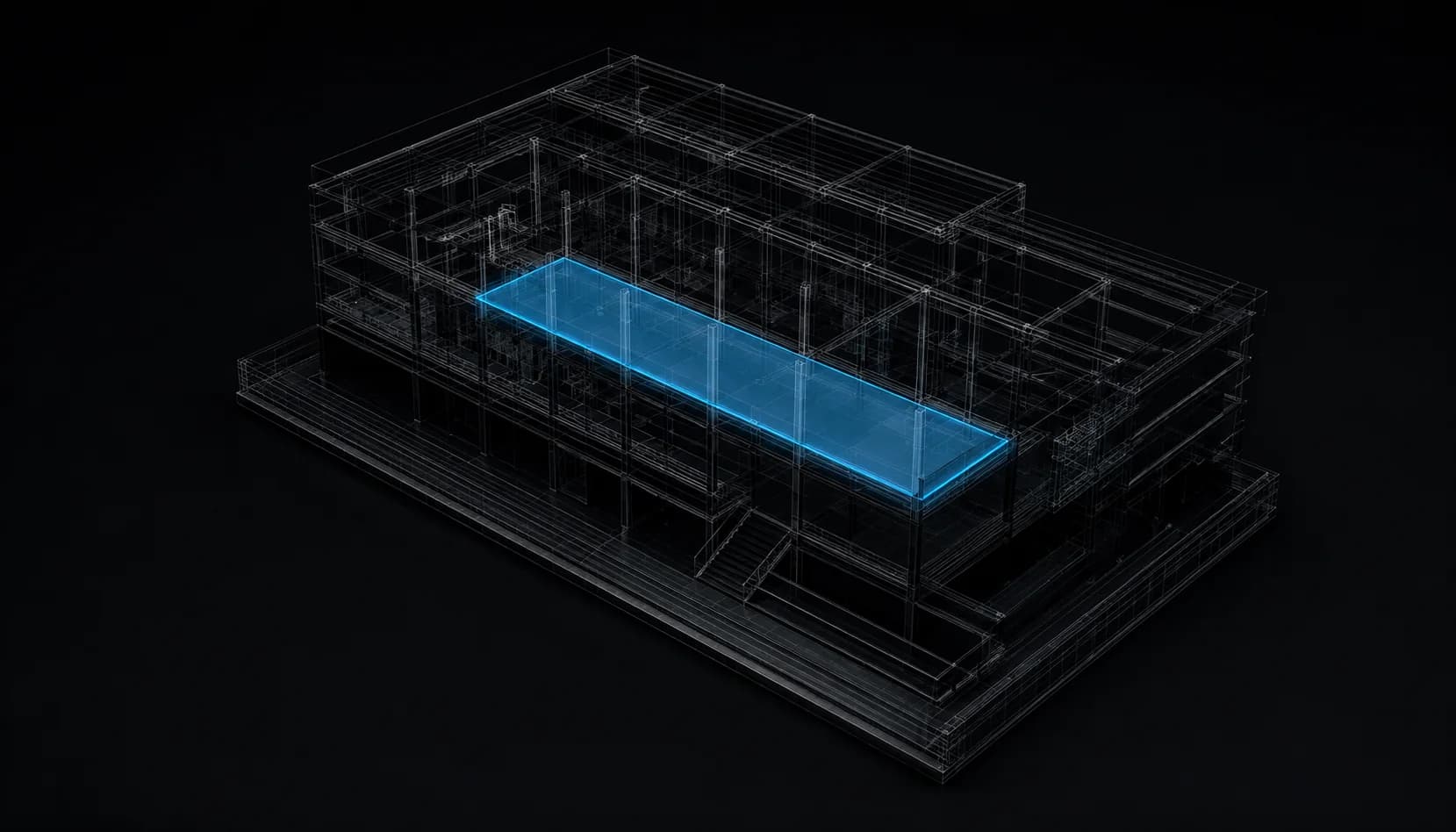
INPSN’s drag-and-drop command system does not imitate game-style controls or conventional surveillance dashboards. It is an operational governance framework that transforms the entire digital twin into a live command surface. Every redeployment, route adjustment, incident response, or spatial escalation directive is issued by interacting directly with the environment itself rather than navigating through menu-driven abstractions. The building becomes the command instrument.

Direct Spatial Interaction as a Command Philosophy
In conventional systems, operators interpret camera feeds and issue verbal or text-based commands, creating delay, dependency, and interpretive risk. INPSN replaces this with a direct spatial-interaction model: supervisors reposition guards, adjust their pathways, or initiate incident workflows by interacting with the exact location inside the 3D/360° operational environment where action is required.
The command is not expressed verbally, it is expressed spatially. The guard or assigned unit receives the instruction through their authorized device, guided by UWB positional orientation, gyro-sensor cues, and MYTHIC-validated movement advisories. This ensures that every command carries unambiguous spatial meaning, independent of language, interpretation, or environmental noise.

Live Redeployment Through Spatial Command Surfaces
Within the digital twin, every operational entity, guards, response units, supervisory teams, appears as anonymised turquoise spatial constructs. Authorized users may directly reposition an entity within the live environment by selecting it and dragging it to a new spatial coordinate.
The system immediately interprets this as a command signal and generates an institutional-grade instruction package:
- A lawful redeployment directive
- A validated movement path (AI-recommended or supervisor-chosen)
- A compliance timeline
- Real-time positional feedback
No route or command executes autonomously unless the client has explicitly authorized AI orchestration. In all modes, the spatial intent always originates from a human or is approved by one. INPSN merely ensures the command is translated into precise movement and monitored with legally indexed fidelity.
Corridor, Zone, and Multi-Floor Directed Pathways
The Command Action Layer operates consistently across:
- Single rooms
- Entire floors
- Multi-floor complexes
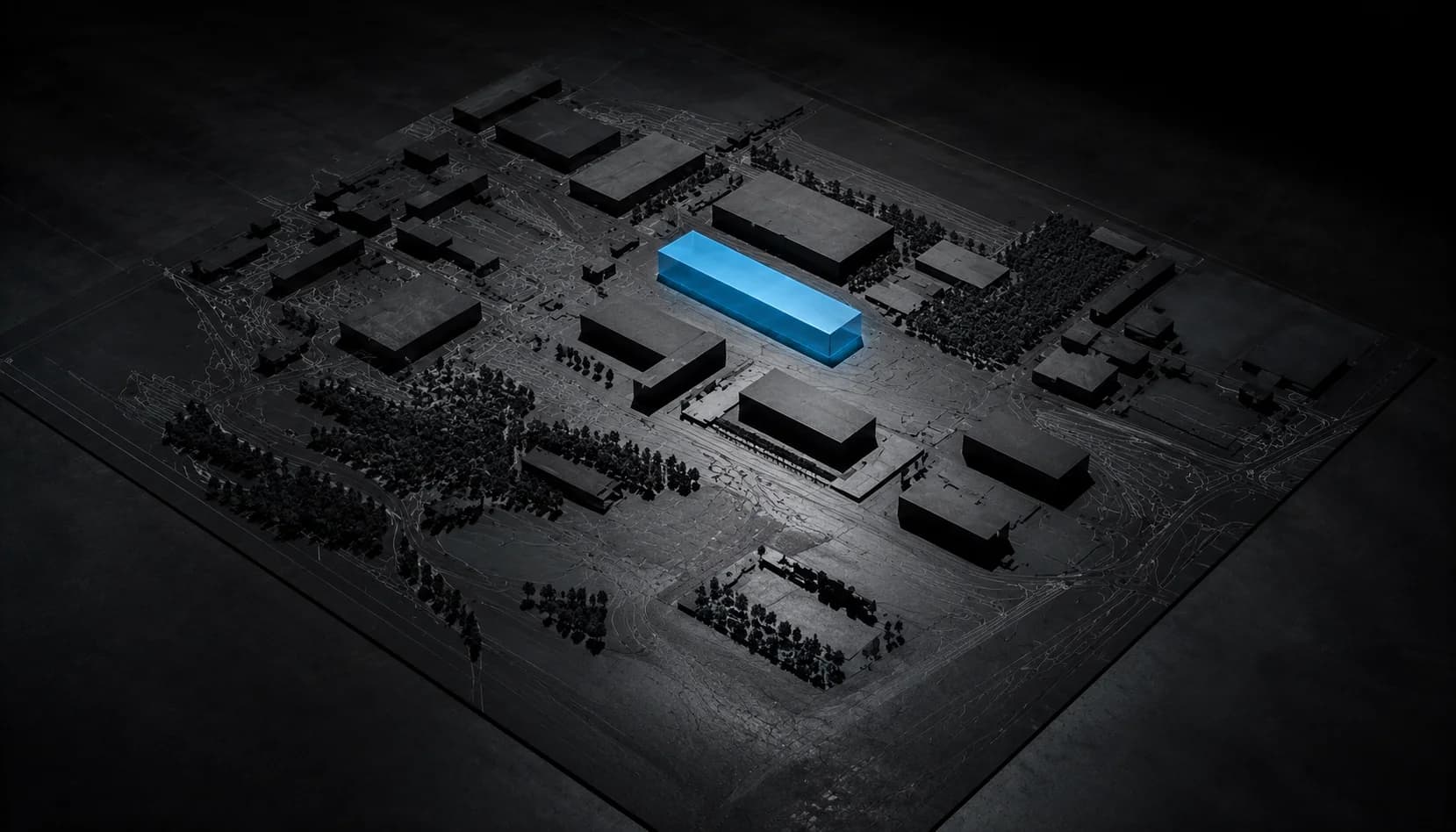
- Distributed buildings
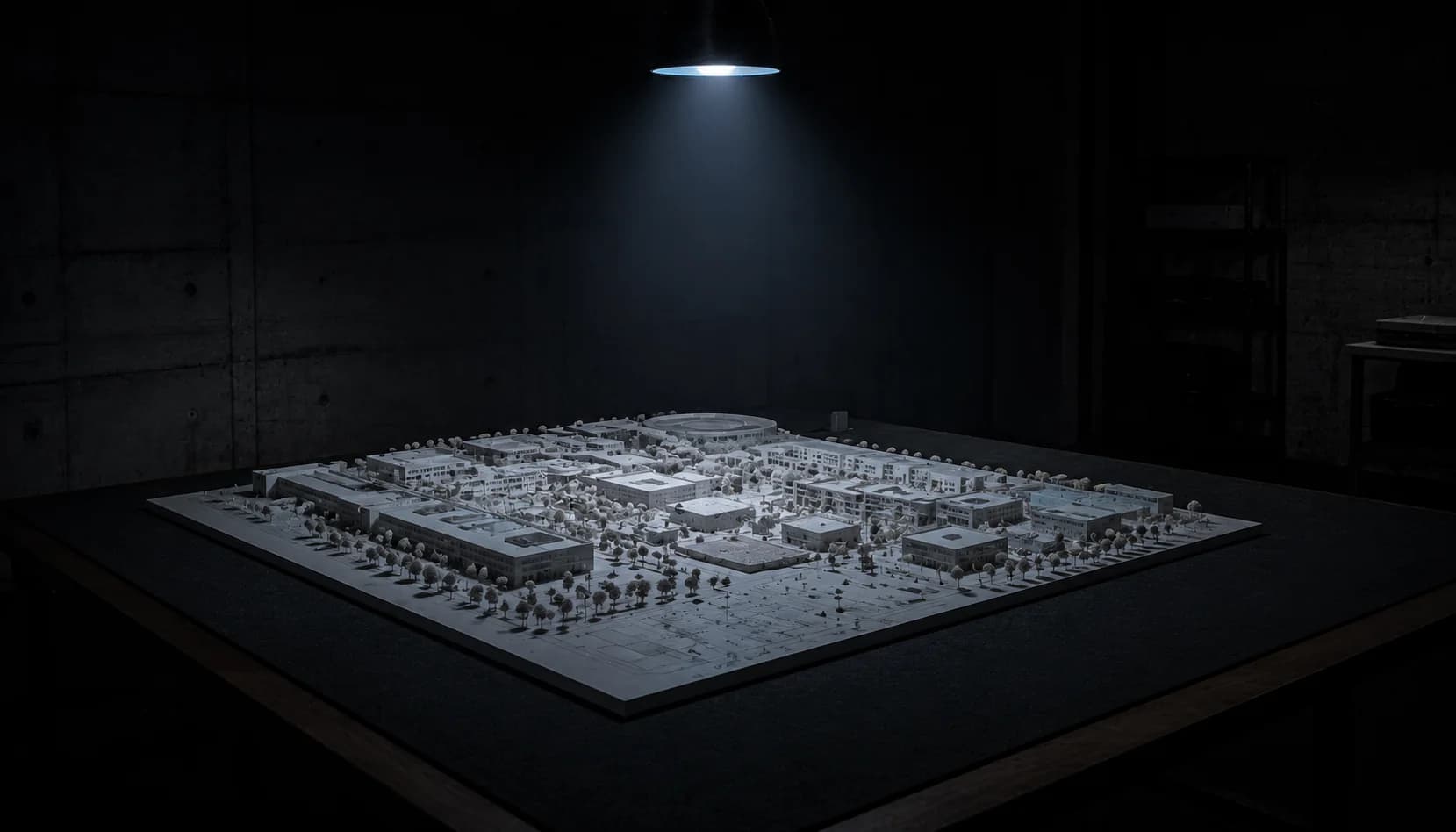
When a guard is reassigned, INPSN automatically contextualizes the movement within the estate’s architectural structure. Stairs, lifts, restricted corridors, or dedicated operational pathways are incorporated into the path advisories.
The supervisor may approve AI-suggested routes or manually define a preferred pathway by tracing a path across the twin. Every directive remains bound to the building’s legally measured spatial geometry, ensuring that on-ground execution aligns with the verified premises.
Incident-Driven Spatial Command Execution
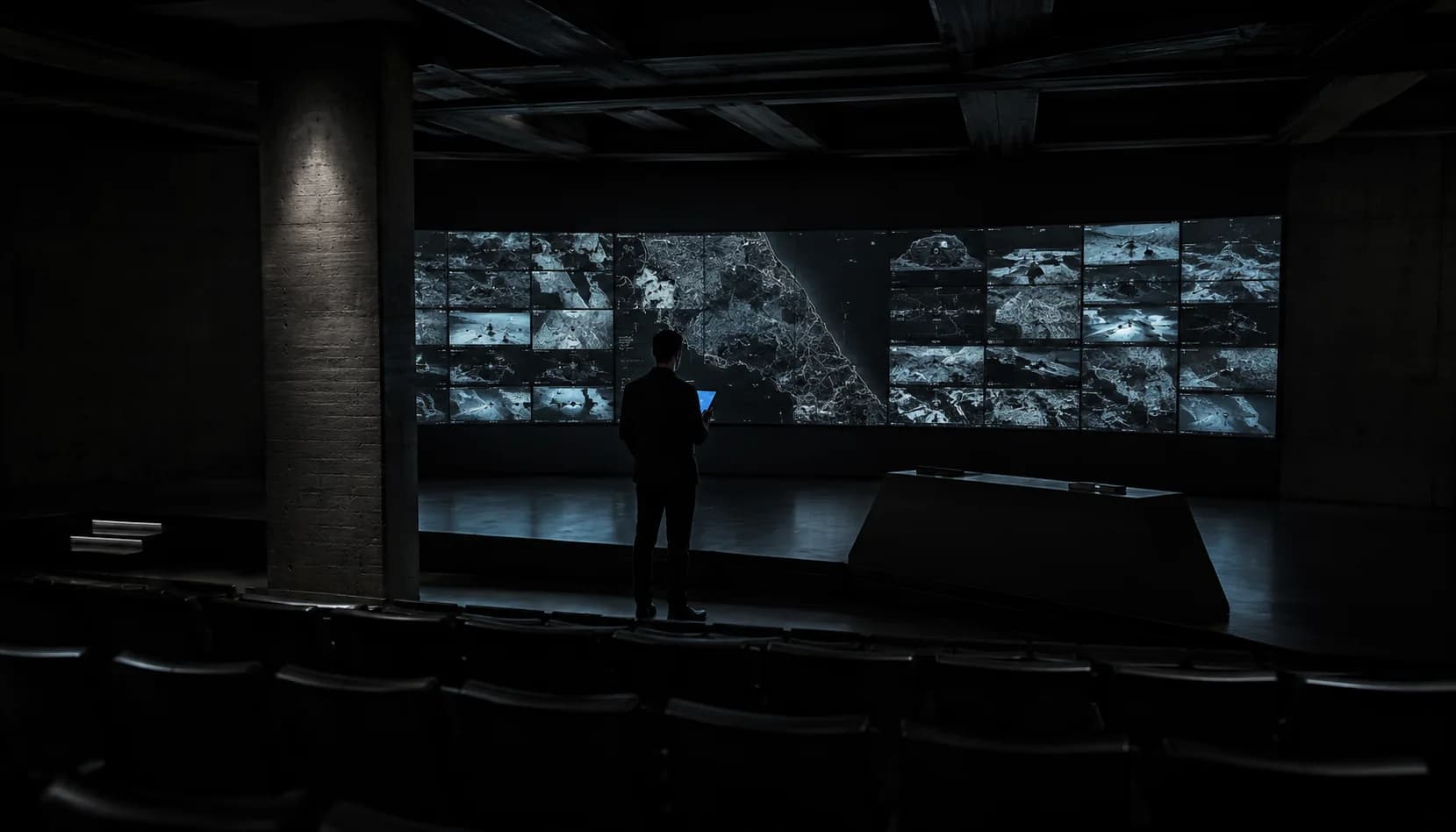
When MYTHIC flags a behavioural escalation or environmental anomaly, the Command Action Layer enables supervisors to take instantaneous action:
- Select the nearest or most appropriate guard
- Drag them toward the incident zone
- Approve or adjust the pathway
- Initiate a predefined response code
The system records:
- Command origin (who issued)
- Timestamp of directive
- Acknowledgment by the guard
- Compliance trajectory
- Arrival confirmation
- Resolution log
This creates a full chain-of-command record suitable for audit, regulatory scrutiny, or insurance assessment.
Guard Response, Device Coordination, and Execution Feedback
Once a redeployment command is issued, the assigned guard receives:
- Spatial direction on their UWB-guided device
- Gyro-sensor-based orientation cues
- Visual or haptic navigation indicators
- Estimated arrival timelines
The system monitors their movement continuously, ensuring that pathway adherence, obstruction events, delays, or deviations trigger immediate supervisory alerts. This ensures discipline, safety, and accountability without relying on intrusive operational review or biometric evaluation.
The guard’s interface is designed so that it does not reveal identity-based information about others. It displays only spatial instructions and operational requirements.

Multi-Unit Coordination & Parallel Pathing
Large estates often require multiple guards to reposition simultaneously. INPSN supports parallel command execution:
- Multi-select spatial assignment
- Group path advisories
- Split-unit movement coordination
- Converging or diverging spatial deployment patterns
MYTHIC may propose pre-structured formations, particularly in crowd-pressure scenarios, evacuation conditions, or risk-pattern escalation, but none activate without explicit human authorization.
Compliance, Governance, and Institutional Control
Every command issued through the Action Layer is:
- Logged
- Time-indexed
- Linked to a verified user
- Cross-referenced with spatial outcomes
No unapproved automated command is permitted. No subsystem may circumvent client authority.
The entire platform operates as a sovereign governance structure where the estate owner retains absolute command rights.
NDA-Restricted Engineering Detail
Certain technical disciplines within the Command Action Layer, including path arbitration logic, guard-device synchronization rules, command-intent parsing models, and spatial action-validation protocols, are reserved exclusively for enterprise and institutional clients under NDA. These limited disclosures ensure that due-diligence reviews can be performed without exposing proprietary coordination methodologies.
This page describes system doctrine, operational intent, and safety governance. Technical parameters, implementation details, and operational thresholds are restricted and disclosed only under contractual NDA.