SPATIAL INTELLIGENCE ARCHITECTURE OVERVIEW
The INPSN Spatial Intelligence Layer
Powered by MYTHIC, the Cognitive Coordination Entity
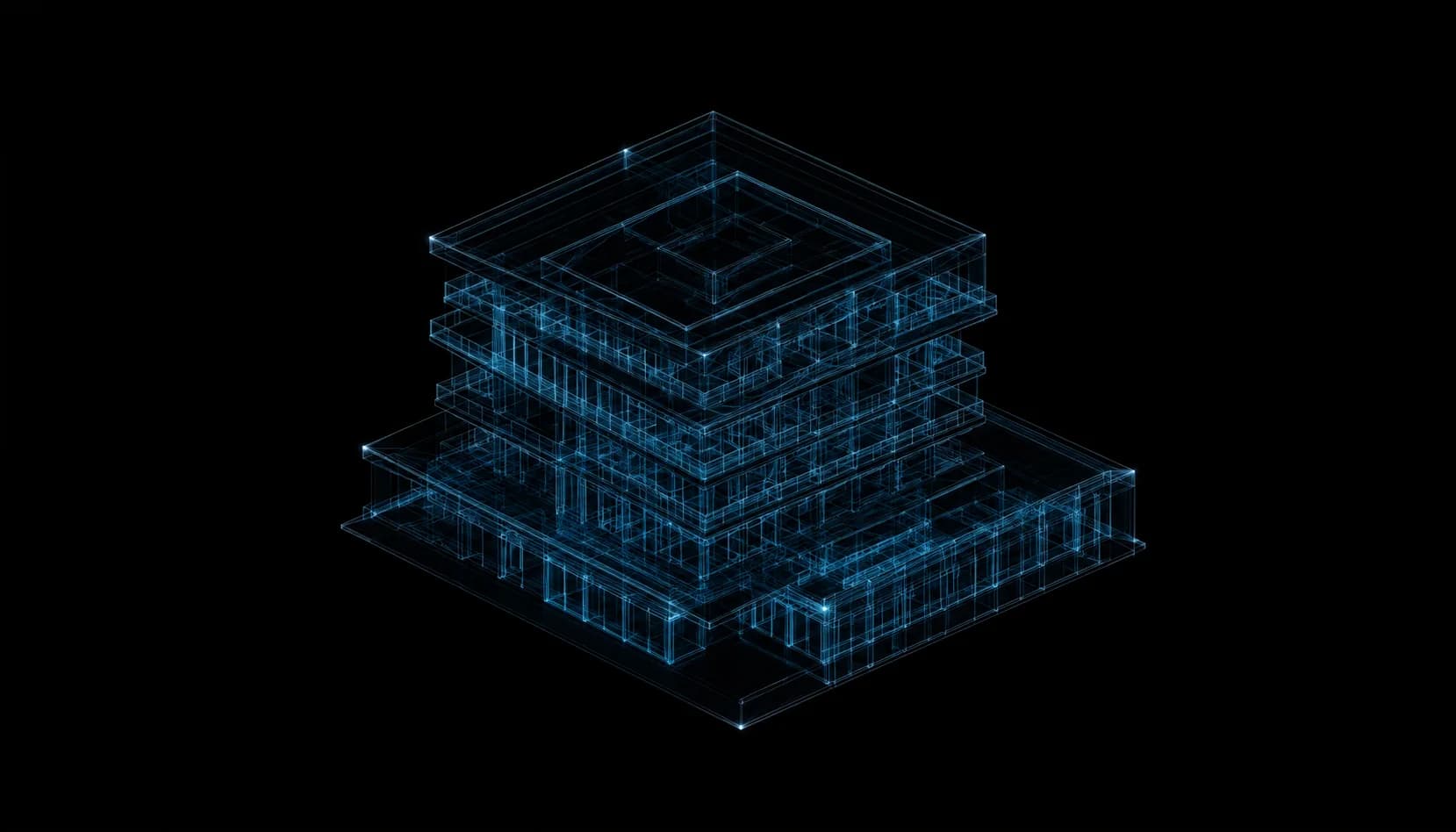
INPSN is a live, frequency-intelligent spatial command environment that transforms a client’s physical premises into an actively monitored, three-dimensional digital safety domain for proactive situational awareness, cognitive risk coordination, and lawful human response command.
As a new class of frequency-based spatial motion intelligence network, INPSNcontinuously senses and reconstructs live movement across space into navigable 3D / 360° command views, converting otherwise invisible physical dynamics into actionable spatial safety intelligence without identity surveillance.
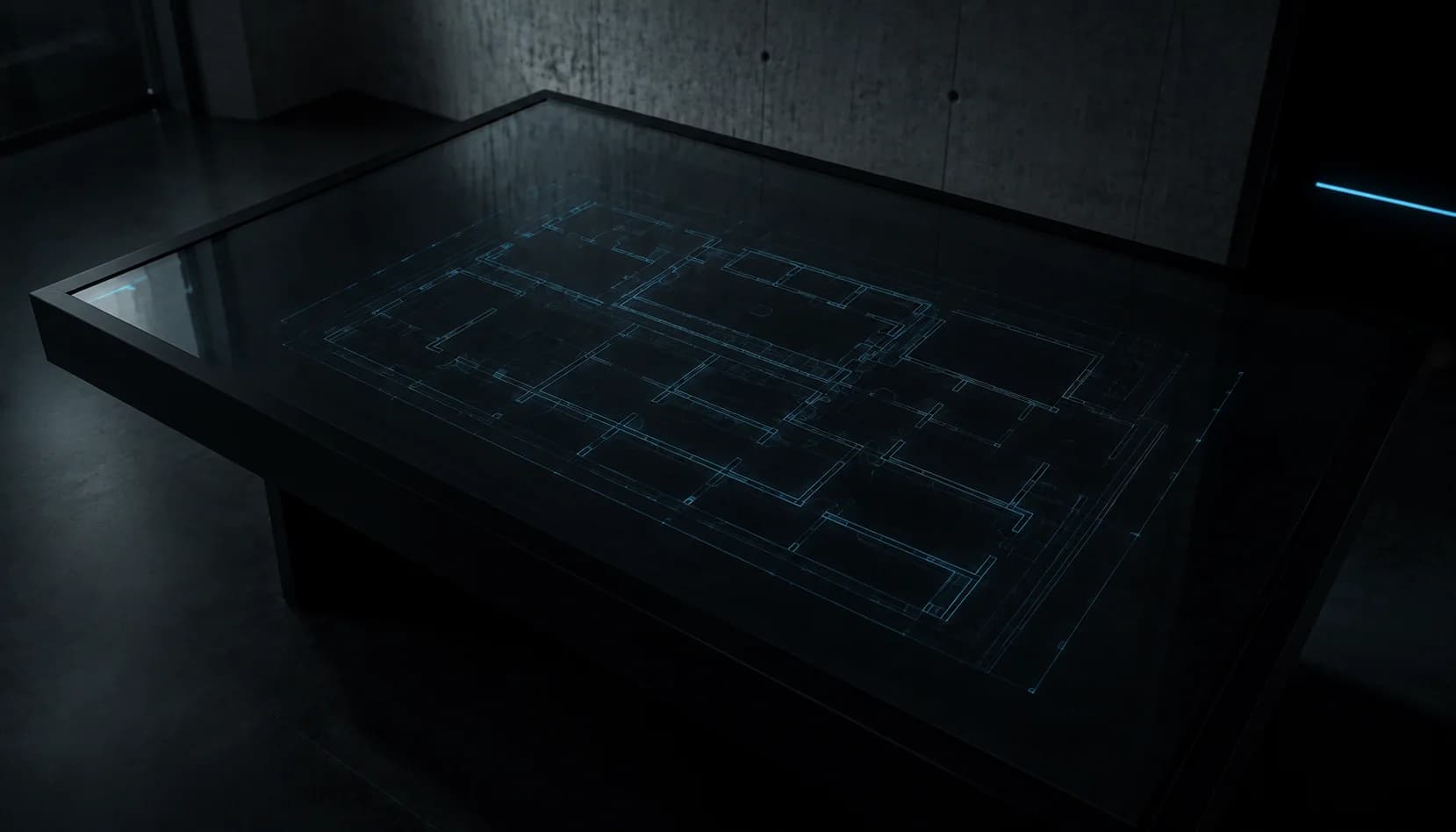
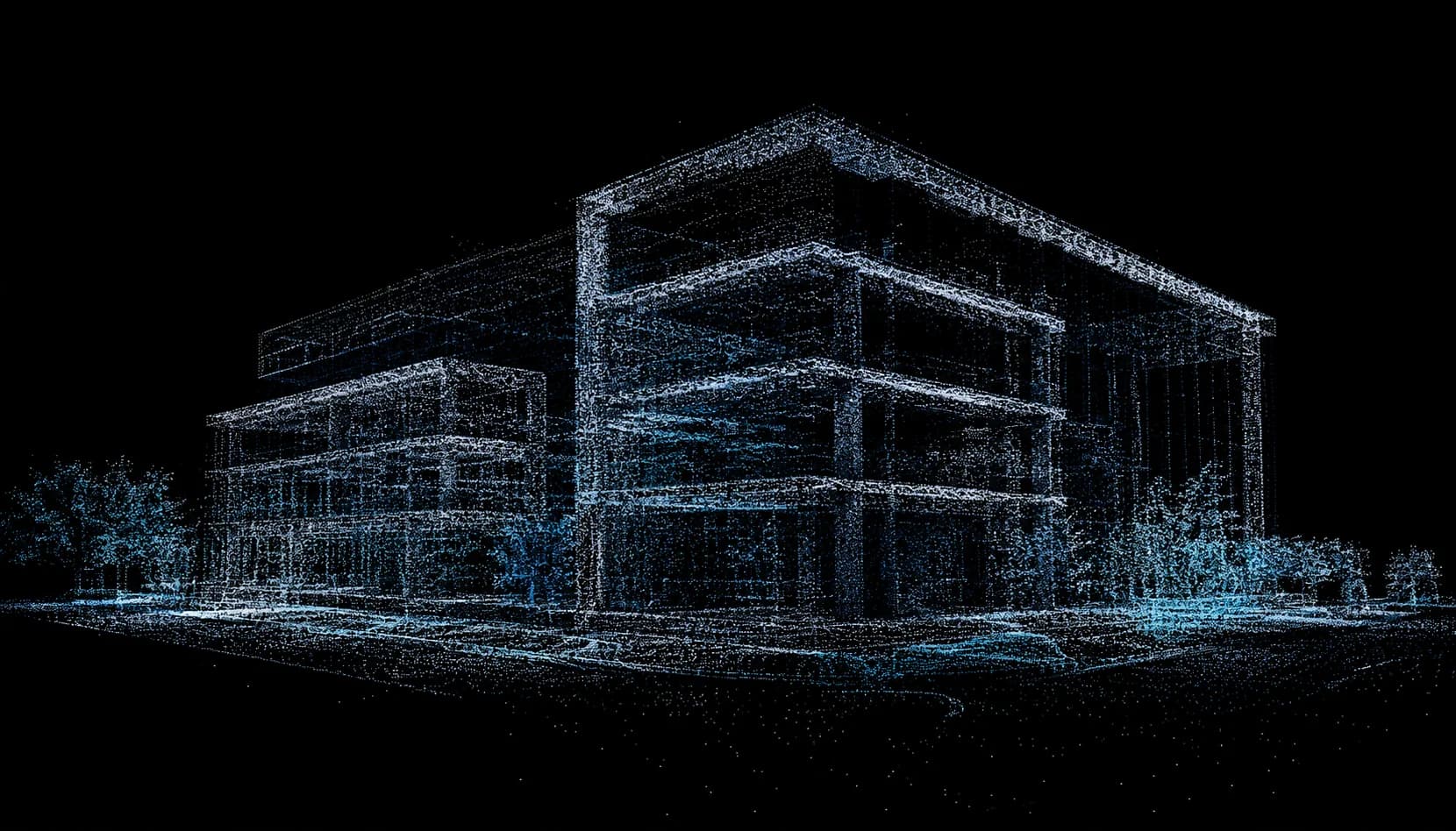
Each INPSN deployment begins with the construction of a high precision measured digital twin of the client’s entire property, generated directly from the client’s submitted architectural floor plans, building drawings, registered area plans, sanctioned layouts, and validated on-site dimensional surveys. This process recreates both internal and external environments, including buildings, transport paths, access corridors, perimeter boundaries, open spaces, and client-designated safety zones, into a fully navigable three-dimensional operational model using accurate legal measurement baselines suitable for forensic-grade documentation, evidentiary validation, and insurance verification purposes.
The resulting environment forms a living operational map into which continuous 3D / 360° spatial motion intelligence is projected, not as a static blueprint, but as a real-time digital representation of all dynamic movement activity occurring across the protected premises.
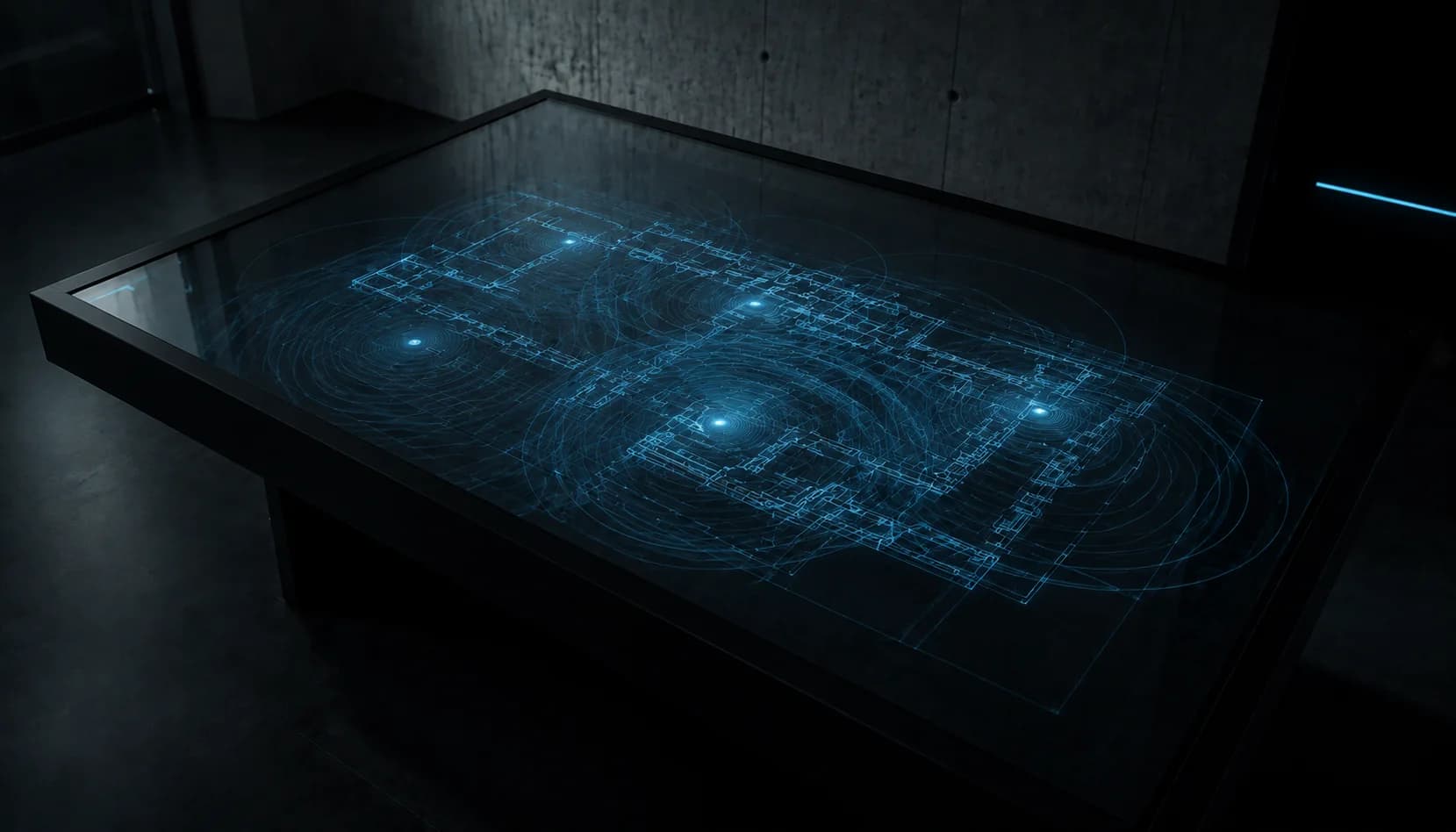
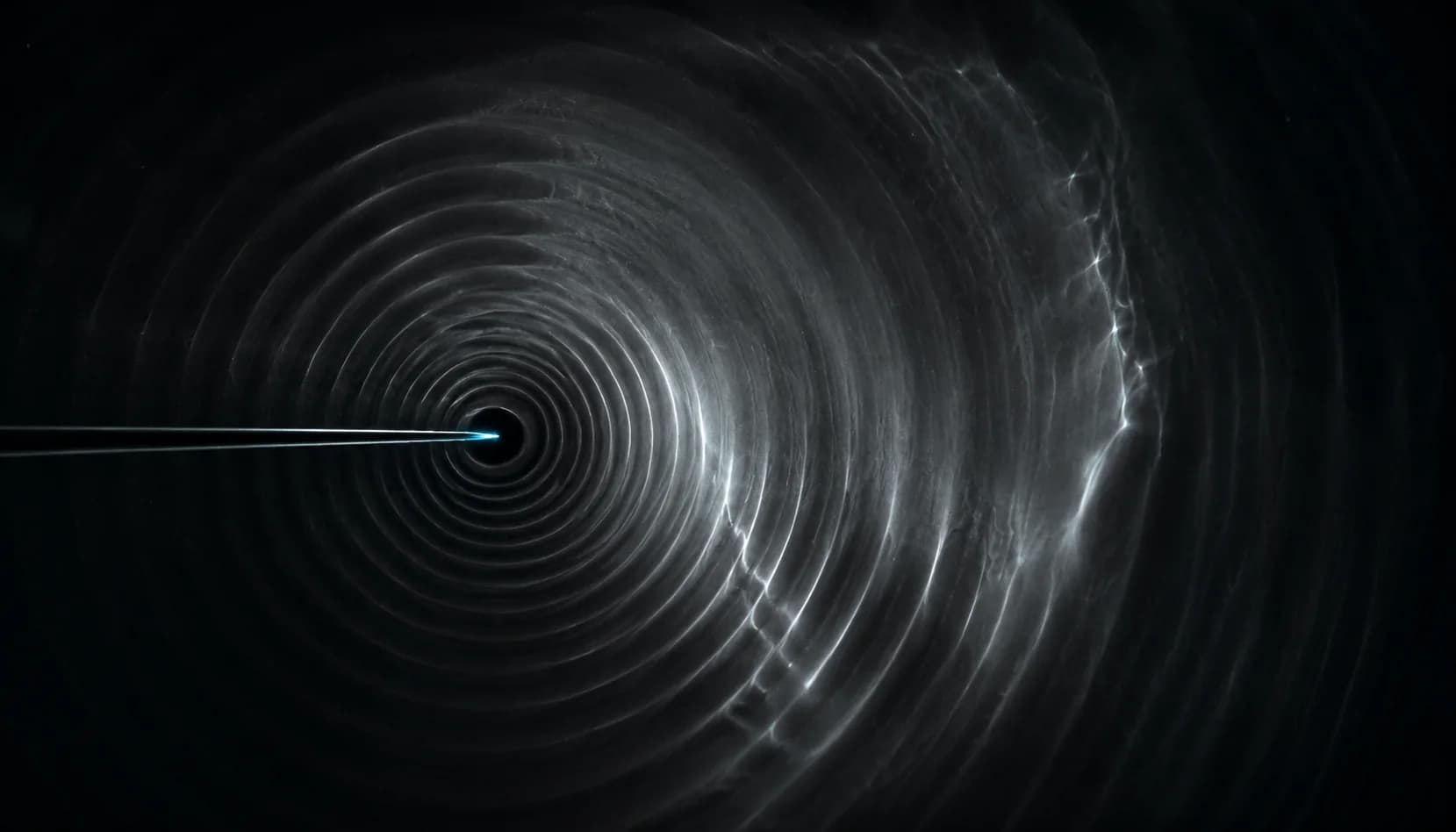
Across this digital twin, INPSN deploys a synchronized 360-degree ultra-wideband spatial perception grid formed by ultra-low-power nanosecond micro-burst UWB anchors calibrated into an active frequency mesh network. This technology does not rely on optical imaging or biometric surveillance. Instead, it interprets how frequency pulses propagate, reflect, and are geometrically obstructed by movement within space, enabling the real-time construction of three-dimensional motion intelligence profiles derived from frequency-blockage distortion mapping.
Through this mechanism, human presence and object motion are reconstructed as full geometric 3D movement forms in live 360° space, allowing INPSN to maintain perception of:
- Individual and group human movements and collective movement patterns in continuous 3D
- Live body-posture geometries, including standing, seated, fallen, compressed, stagnant, or clustered positions expressed as spatial motion-forms
- Crowd density gradients and directional flow dynamics across large-footfall zones
- Object introduction, displacement, removal, and micro-disturbances, including small-scale events such as dropped or shifted items within configured sensitivity thresholds
- Route congestion development, obstruction emergence, and deviation from mapped movement corridors
- Environmental disturbance signatures, including frequency-linked anomalies associated with abnormal ignition or heat-rise conditions, represented via infra-style frequency overlays
All fixed objects mapped during the initial digital-twin generation are registered into the system as static spatial references. Any externally introduced object, relocated asset, or temporary obstruction first appears as an unregistered motion geometry anomaly. Through the NeuraLoop Intelligence Interface (NII), authorized operators may classify, approve, and register new or relocated objects, converting them into updated fixed references of the digital twin. All transitions, additions, removals, movements, and re-classifications, are preserved as logged spatial records, ensuring that every physical change within the environment remains auditable and reconstructable.
For operational command visualization, motion intelligence is displayed using synthetic, non-biological color mapping generated exclusively by NeuraLoop’s 3D visualization engine. These colors are designed solely to enhance command comprehension and forensic clarity, without recreating real-world skin tones, clothing colors, or identifying appearance features. The system emphasizes geometric motion accuracy over visual mimicry, ensuring privacy preservation alongside spatial precision.
Advanced deployments may incorporate edge-compute acceleration and environmental noise-correction layers where institutional clients require enhanced continuity or low-latency command operations.
Directed Behavioural Intelligence & MYTHIC Coordination
The Behavioural Intelligence Engine (BIE) performs continuous evaluation of spatial activity by modeling:
- Individual and group body-language postures and gesture speed transitions
- Directional aggression indicators and interpersonal motion escalation patterns
- Crowd compression precursors and disorder signatures
- Stationary anomaly states and stagnation clustering
- Deviation from expected behavioral flow baselines
BIE does not perform identity recognition or personal profiling. All cognitive modeling relies exclusively on posture geometry, motion speed variance, and collective spatial pattern deviations derived from frequency mesh data, not biometric identifiers.
BIE intelligence outputs are synthesized by the MYTHIC Cognitive Coordination Entity, trained through:
- Controlled individual and multi-person posture simulation datasets
- Behavioral scenario rehearsals and safety drills
- Historical conflict pattern replays
- Incident escalation modeling exercises
- Continuous learning from recorded spatial posture-movement archives
This training enables MYTHIC to recognize behavioural escalation dynamics, for example identifying conflict motion signatures between two individuals embedded within a crowd, tagging the developing anomaly and escalating alerts while maintaining individual anonymity.
MYTHIC learns pattern deviations relating to safety-critical environmental dynamics through continuous live reinforcement from validated field operations, enabling it to issue early-risk advisories when emerging spatial anomalies exhibit escalation signatures that may evolve into hazardous conditions.
MYTHIC converts its findings into situational advisories and response coordination guidance, operating under three governed command intelligence modes:
1. Manual Intelligence Mode
MYTHIC presents live spatial findings solely for human supervisory evaluation. (Where pre-configured by the client, limited automation indicators may be recorded by the system, but all decisions remain human-validated.)
2. Augmented Mode
MYTHIC provides continuous real-time operational review alerts, guard performance analytics, and deployment recommendations, offering proactive incident-yet-to-happen warnings, movement anomaly forecasting, and suggested route adjustments. Supervisors, owners, and command units receive visibility into live and historical guard analytics, patrol compliance, incident attendance records, response timelines, and resolution performance scoring, with all deployments requiring human approval.
3. Client-Authorized Autonomous Coordination Mode
Activated exclusively by explicit client authorization, MYTHIC may orchestrate predefined safety workflows autonomously, dynamically assigning the closest suitable guard to a developing incident zone based on UWB tag proximity guidance, issuing real-time path advisories via gyro-sensor command devices, estimating arrival ETAs, and tracking movement compliance from start-to-destination until resolution confirmation. Human override remains active at all times, and all autonomous actions are mirrored into the incident log for full governance transparency.

Command Theatre, Visualization & Operational Oversight
The NeuraLoop Intelligence Interface (NII)presents environments as an integrated 3D / 360° spatial command theatre, supporting both live operational review and recorded forensic review.
Live Operational Views include:
- 360-degree orbital perspectives showing buildings, floors, motion geometries, active human movement forms, and object motion
- Top-down floor-grid command maps
- Side and depth-perspective sectional views
- Full-building “no-walls” composite views, where structural obstructions are visually removed within the digital twin grid to permit simultaneous inspection of all floors and zones inside one integrated live environment map
- Infra-style frequency overlays for frequency-linked disturbance patterns consistent with heat-related events, density escalation, disturbance patterns associated with ignition-adjacent conditions, and crowd compression mapping
- Selectable compound views, enabling corroboration across multiple buildings or estate districts in a unified mesh
Recorded Event Views preserve identical modalities, allowing:
- 3D / 360° time-indexed motion replay of any historic event
- Orbital, top-down, side, sectional, and infra-overlay forensic views
- Zone-isolated or whole-site spatial playback reconstructions
These capabilities deliver video-type and 3D-video-type reconstructions from any angle, derived from frequency-mesh motion intelligence rather than invasive surveillance imaging.
Guard Intelligence, Performance Analytics & Command Control
Security personnel appear in NII as turquoise operational entities, continuously tracked through UWB positional tags integrated with gyro-sensor communication devices. The system enables:
- Live 3D tracking of all guards across premises
- Visualization of pre-assigned patrol corridors and designated duty routes, selectable via direct command interaction for manual route reassignment and real-time redeployment
- Detection of route adherence or deviation events
- Analytics on task accuracy, duty compliance, incident attendance participation, and response efficiency
- Individual guard operational profiles showing historical attendance records, incident handling summaries, escalation actions taken, reporting documentation, and rectification closures
During any incident or alert:
- Guard responses are monitored live by supervisors, command units, and client stakeholders
- Movement compliance, arrival ETA, real-time actions, resolution status, and reporting timelines are continuously visible
- Guards may escalate situations directly using their Emergency Command interface buttons on the NII mobile application, triggering priority alerts monitored by MYTHIC and command units
All alerts, assignments, movements, escalations, actions, and closures generate tamper-evident, cryptographically verifiable timestamped operational logs, providing auditable, verifiable performance records for internal governance, regulatory review, and insurance documentation.
Governance, Authority & Legal Control Framework
Command authority hierarchy allows:
Ultimate command authority remains vested solely with the client ownership body.
Through the NeuraLoop Intelligence Interface (NII) across mobile, tablet, and secure web consoles, owners retain continuous, global command access, enabling authorization, override, or suspension of any operational or automated activity from anywhere in the world.
The client retains the privileged ability to:
- Grant and revoke supervisory or operational control rights in real time
- Suspend or reinstate MYTHIC coordination functions on demand
- Block or restrict any subordinate command authority instantly
- Assume full direct manual command, bypassing supervisory or autonomous workflows when necessary
All INPSN command pathways are reversibly governed and owner-overridable by design. No AI or supervisory action may proceed beyond the scope of explicit client consent.
Command tiers:
- Direct client command control, including the capability to restrict or override supervisory control when necessary
- Supervisor command operations, delegated management under client authority
- MYTHIC advisory intelligence & orchestration support under governed automation frameworks
When contracted, all guard operations may additionally operate under the oversight of The NeuraLoop Global Protection Directorate (NGPD), a separately contracted institutional governance service introducing enhanced protocol enforcement, escalation standards, training compliance auditing, and layered safety command precision beyond conventional security management structures, staffed by INPSN-certified operational specialists trained in spatial command doctrine, escalation governance, and compliance-based field coordination.
Evidence, Audit & Insurance Validation Protocols
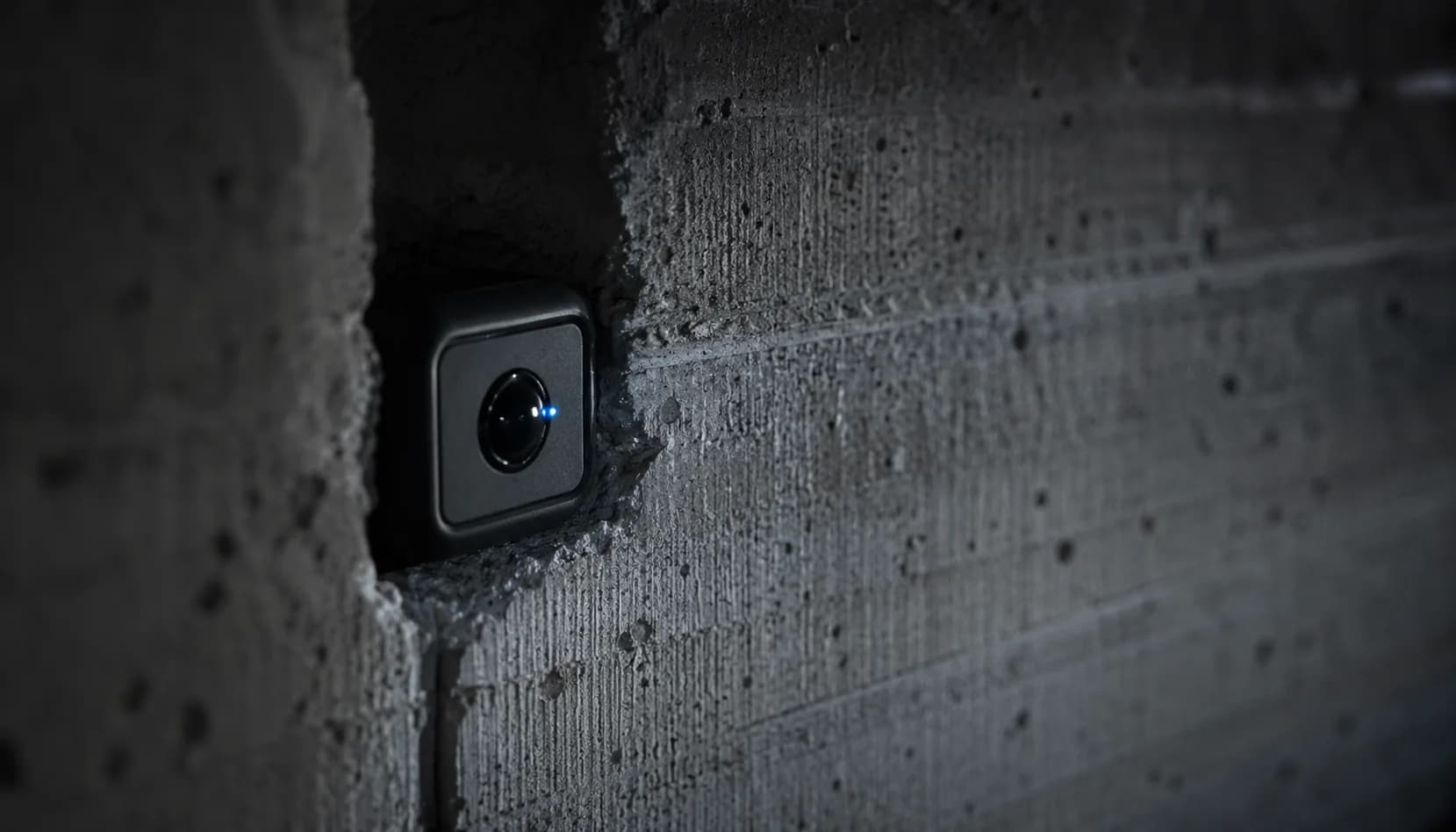
INPSN maintains time-indexed spatial event archives derived from the active frequency mesh and digital-twin environment, supporting:
- Safety audits and post-incident investigations
- Insurance validation and claims assessment, directly correlated to legally measured premises data
- Regulatory or judicial evidence submissions
Historical reconstructions may be inspected via:
- 3D / 360° motion replays from any angle
- Grid, sectional, side, and infra-view forensic overlays
All reconstructions are generated from frequency-based spatial intelligence rather than direct imaging surveillance.
SIGNET Optical Corroboration Layer : Optional Dual-Layer Integration
For sites where visual confirmation and regulatory documentation require parallel optical verification alongside spatial frequency intelligence, INPSN supports optional integration with SIGNET, NeuraLoop’s MYTHIC-coordinated visual intelligence and optical corroboration platform.
SIGNET functions as a secondary verification layer operating alongside INPSN’s frequency-mesh cognition, forming a dual-layer safety intelligence architecture in which:
- INPSN delivers continuous privacy-preserving spatial motion intelligence, and
- SIGNET provides lawful optical corroboration synchronized to spatial event timelines for investigative documentation, compliance reinforcement, and supplementary insurance validation.
SIGNET exists solely to provide parallel visual substantiation where optical confirmation is operationally or legally advantageous.
Operational Characteristics
SIGNET operates as an always-available optical intelligence layer, activated only under governed authorization and purpose-defined documentation contexts.
- Coordinated by MYTHIC cognition for synchronized spatial cross-evaluation
- Integrable with verified third-party camera infrastructures
- Natively compatible with NeuraLoop’s proprietary camera systems (in development)
- Fully separable from MYTHIC correlation drivers when governed by client or supervisory command
- Able to operate independently in operator-directed corroboration network when required
NeuraLoop Proprietary Optical Systems : In Development
NeuraLoop’s upcoming proprietary camera systems are engineered as precision optical command instruments designed to integrate seamlessly within SIGNET’s spatial-intelligence choreography.
Core capabilities include:
- Dynamic optical zoom and ultra-wide-angle switching for simultaneous scene coverage and detailed inspection
- Automated lens-calibration routines that adjust optical clarity parameters in real-time to maintain high-definition resolution across lighting and atmospheric variation
- Intelligence-directed camera reorientation and scene rotation, coordinated across multi-camera networks to retarget motion-relevant zones without disrupting other active views
- Multi-camera rotation choreography that distributes corroboration angles dynamically to minimize environmental blind-spots while ensuring persistent scene continuity
- Seamless focus re-prioritization, allowing optical instruments to adjust framing toward motion-active areas without breaking simultaneous wide-area situational coverage
“All optical optimization functions are constrained to scene clarity and event documentation purposes and do not perform identity recognition.”
These physical lens operations are coordinated as scene-reference mechanisms for documentation clarity and do not constitute biometric targeting or identity profiling.
Command Visualization Modes
SIGNET feeds directly into the NeuraLoop Intelligence Interface (NII) under two lawful command visualization layers. These visualization modes operate within SIGNET’s governed control states (synchronized corroboration, operator-directed corroboration, or suspended intelligence), as defined by client authorization.
Optical Marked Mode
MYTHIC-coordinated computer-vision overlays annotate spatial activity within optical footage:
- Motion-reference bounding geometry
- Environmental activity zoning
- Temporal movement path traces synchronized with INPSN’s spatial reconstructions
Marked Mode allows command centers to evaluate complex operational environments across large camera networks by surfacing only motion-relevant visual data rather than exhaustively reviewing passive feeds.
This mode is designed to solve command-center overload in large estates and facilities by filtering passive static camera feeds and elevating only spatially relevant motion-based activity into operator view, ensuring no critical event is obscured by camera volume or screen saturation.
Optical Unmarked Mode
Raw visual corroboration streams operate without analytic overlays, presenting clean optical imagery for human-directed operational review under site-authorized operational procedures.
Cross-Evaluation Synchronization
SIGNET and INPSN operate under a fully synchronized cross-evaluation framework.
Authorized command units may:
- Review frequency-mesh spatial intelligence independently
- Review optical video streams independently
- Activate split-view correlation displays, overlaying motion-geometry reconstructions with synchronized optical frames for verification and investigative alignment
Governance & Master Control
All SIGNET functionality remains under the direct operational authority of the client.
Ultimate governance authority remains vested solely with the client ownership body.
The client retains the privileged ability to:
- Grant and revoke supervisory or operational control rights at any time
- Suspend or reinstate MYTHIC coordination functions on demand
- Block or restrict any subordinate command authority instantly
- Assume full direct manual control, bypassing supervisory or automated workflows when deemed necessary
No SIGNET or INPSN operational activity executes beyond the jurisdiction of client consent; all command pathways remain reversibly governed and owner-overridable by design.
Authorized governance permits the client, supervisors, or designated command leadership to:
- Activate or suspend SIGNET optical correlation at any time
- Disconnect optical feeds from frequency-mesh synchronization
- Disable MYTHIC coordination of camera interpretation layers
- Maintain SIGNET as a standard autonomous camera operational review network where preferred
- Reactivate analytic cross-fusion exclusively under purpose-defined lawful investigation contexts
This governance architecture ensures SIGNET operates strictly within applicable surveillance regulations, jurisdictional privacy requirements, and client consent protocols.
SIGNET therefore remains a rights-governed verification adjunct, not an intrusive surveillance platform.
Purpose Doctrine
SIGNET exists to support environments where optical documentation is required in parallel with spatial intelligence, enabling:
- Regulatory visual recordkeeping
- Investigative and insurance corroboration
- Multi-angle incident reconstruction
- Confirmatory cross-domain analysis of spatial events detected by INPSN
, all while safeguarding INPSN’s primary doctrine of privacy-preserving spatial safety intelligence.

Operational Philosophy & Domain Suitability
INPSN serves domains where situational uncertainty carries unacceptable risk, including defense installations, aviation hubs, government infrastructure, financial districts, smart-city zones, corporate campuses, industrial complexes, public crowd venues, luxury estates, sovereign residences, and ultra-high-net-worth properties.
Its guiding ethical doctrine remains:
True operational luxury is not spectacle, it is peace of mind derived from continuous situational certainty.
INPSN achieves this through legally compliant motion intelligence and human-authorized command governance, ensuring safety operations remain advanced, accountable, and institutionally controlled.
INPSN deployments are subject to eligibility assessment and governance alignment. Request an institutional briefing.
This page describes system doctrine, operational intent, and safety governance. Technical parameters, implementation details, and operational thresholds are restricted and disclosed only under contractual NDA.