GEOMETRY RECONSTRUCTION PIPELINE
How INPSN converts distortion physics into lawful, non-biometric spatial intelligence.
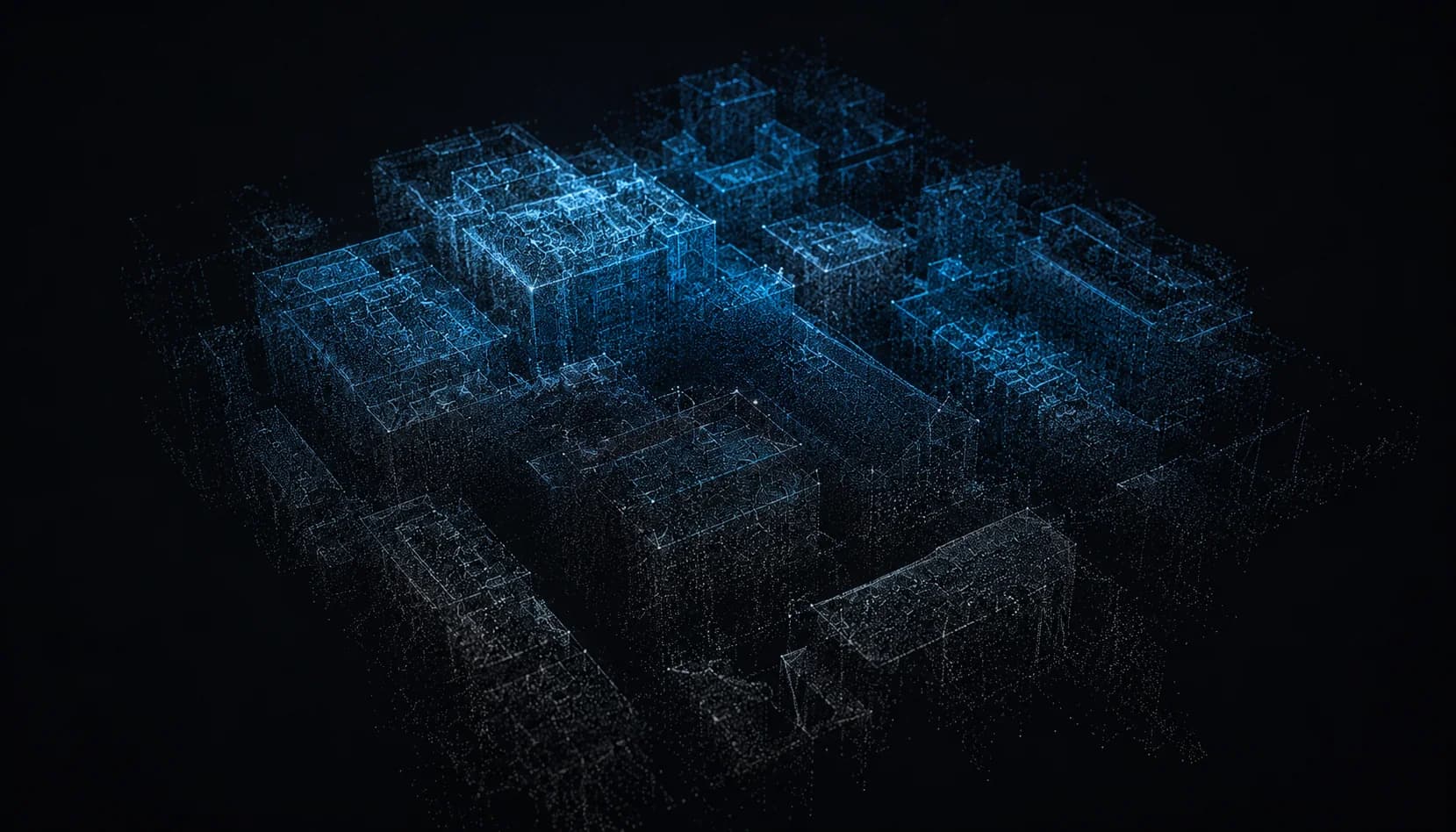
The Geometry Reconstruction Pipeline is the stage where INPSN transforms raw micro-burst distortion fields into coherent, navigable spatial geometry. At this point in the doctrine, perception has already occurred: the environment has been illuminated through ultra-low-power micro-bursts, and the system has understood where movement, obstruction, or posture change is occurring. What emerges next is not a picture, a silhouette, or any biometric trace, but a mathematically stable spatial representation that expresses how the environment is behaving.
INPSN does not attempt to recreate the visual appearance of a human being. Instead, it reconstructs the geometric consequences of presence, motion, and behavioural flow. Distortion signatures arriving from multiple anchors are fused into volumetric forms that express the structure, direction, and evolution of activity in space. This process forms the foundation upon which behavioural intelligence, risk forecasting, command coordination, and spatial decision-making are built.
The pipeline operates continuously, converting time-indexed distortion fields into live three-dimensional geometry that remains fully aligned with the legal digital twin of the premises. No individual identity, bodily feature, or optical likeness is ever created. What is reconstructed is purely spatial behaviour, an abstract but precise representation of how the physical world is changing moment by moment.
Edge-side processing conducts preliminary signal conditioning and noise-normalization before reconstruction logic begins.
This section explains, in narrative form, how geometry is formed, stabilized, contextualized, and passed into MYTHIC for cognitive interpretation.
Distortion-to-Geometry Formation
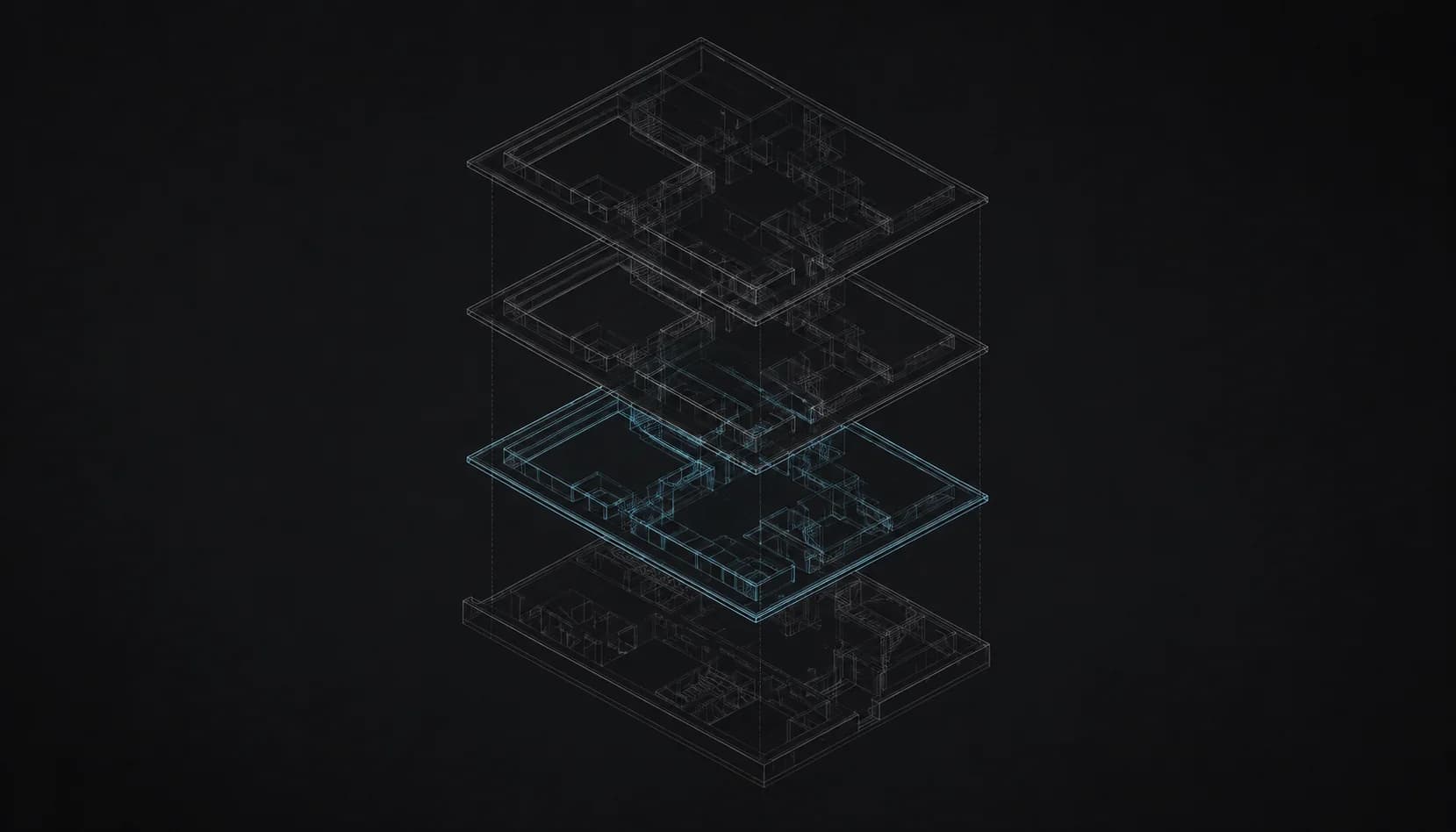
The reconstruction process begins by interpreting how outgoing micro-bursts have returned after interacting with the environment. Each distortion signature, arriving from numerous anchor perspectives, contains evidence of where energy was delayed, redirected, weakened, or reshaped by movement or obstruction. The system overlays these time-indexed fields into a common spatial reference frame, allowing volumes of distortion to be coherently assembled into geometric form.
This formation does not attempt to determine who is present, but rather what spatial volumes are being affected, how those volumes are changing, and which structural boundaries are evolving over time. The result is a non-visual geometric expression of presence, posture, and movement.

Multi-Perspective Fusion & Stability Assurance
Because no single anchor ever carries a complete representation of the environment, INPSN fuses distortion evidence from multiple perspectives to ensure stability and spatial accuracy. Independent anchor viewpoints reinforce or correct one another, eliminating ambiguities that might arise from a single-path signature.
Through this synthesis, the system stabilizes geometry, suppresses noise, and ensures that reconstructed movement remains anchored to the true spatial behaviour of the environment rather than any single distortion fluctuation. The outcome is a collective spatial understanding that is structurally consistent, resistant to perception drift, and reliable for command decision-making.
Posture, Object & Crowd Geometry Differentiation
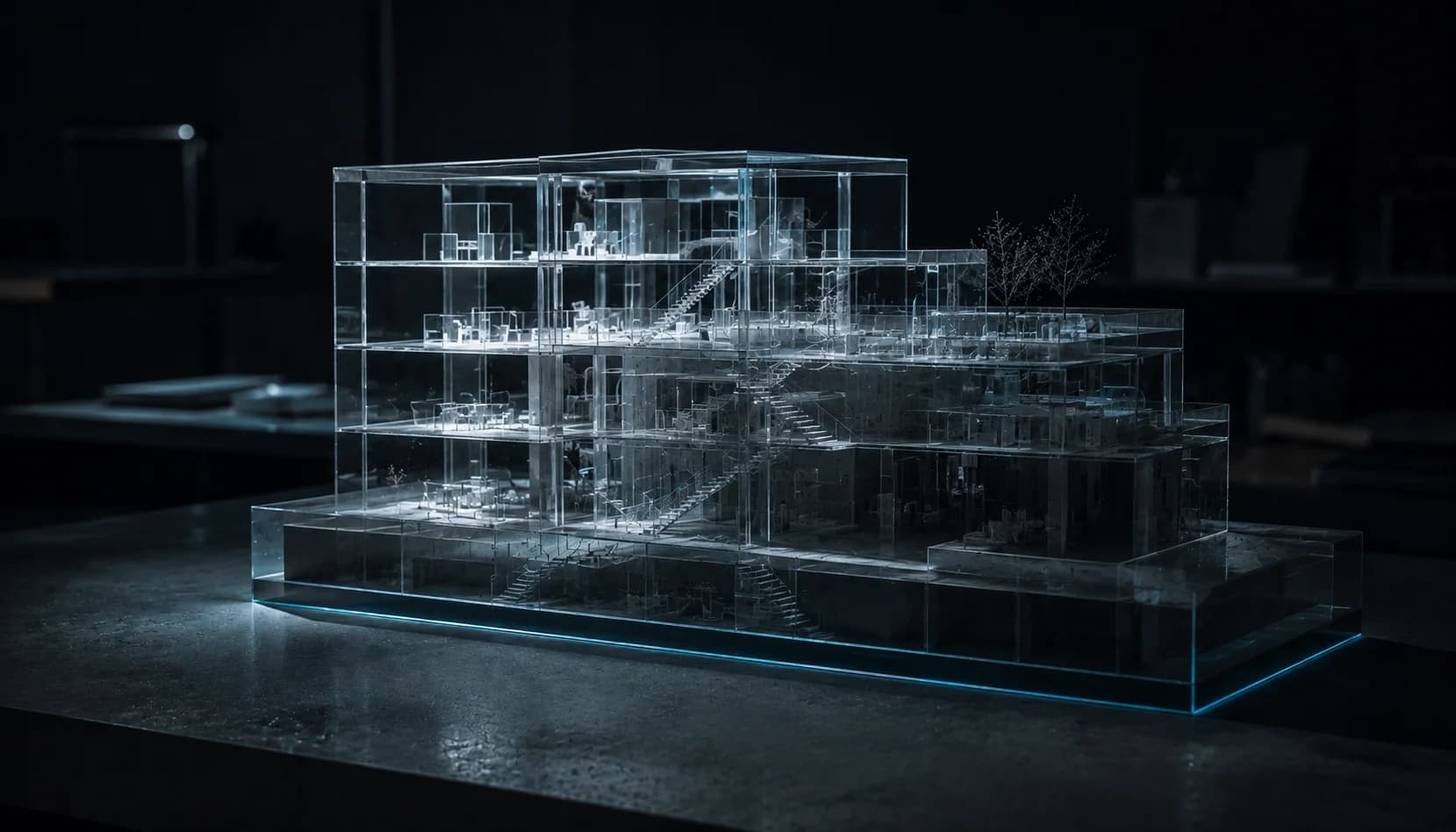
Once stabilised geometry is established, INPSN differentiates between forms based on how they behave in space. A person adjusting posture generates subtly shifting volumetric patterns. A moving object expresses a different behavioural signature. A crowd creates interlinked spatial regions with shared flow vectors and changing density profiles.
The system distinguishes these not by their identity or appearance, but by how their geometric behaviour evolves through time. Standing, sitting, collapsing, clustering, dispersing, entering, and exiting all produce unique distortion behaviours that translate into distinct geometric states. Every reconstruction remains an abstract spatial structure, never a biometric form.
Behaviour-State Encoding & Temporal Evolution
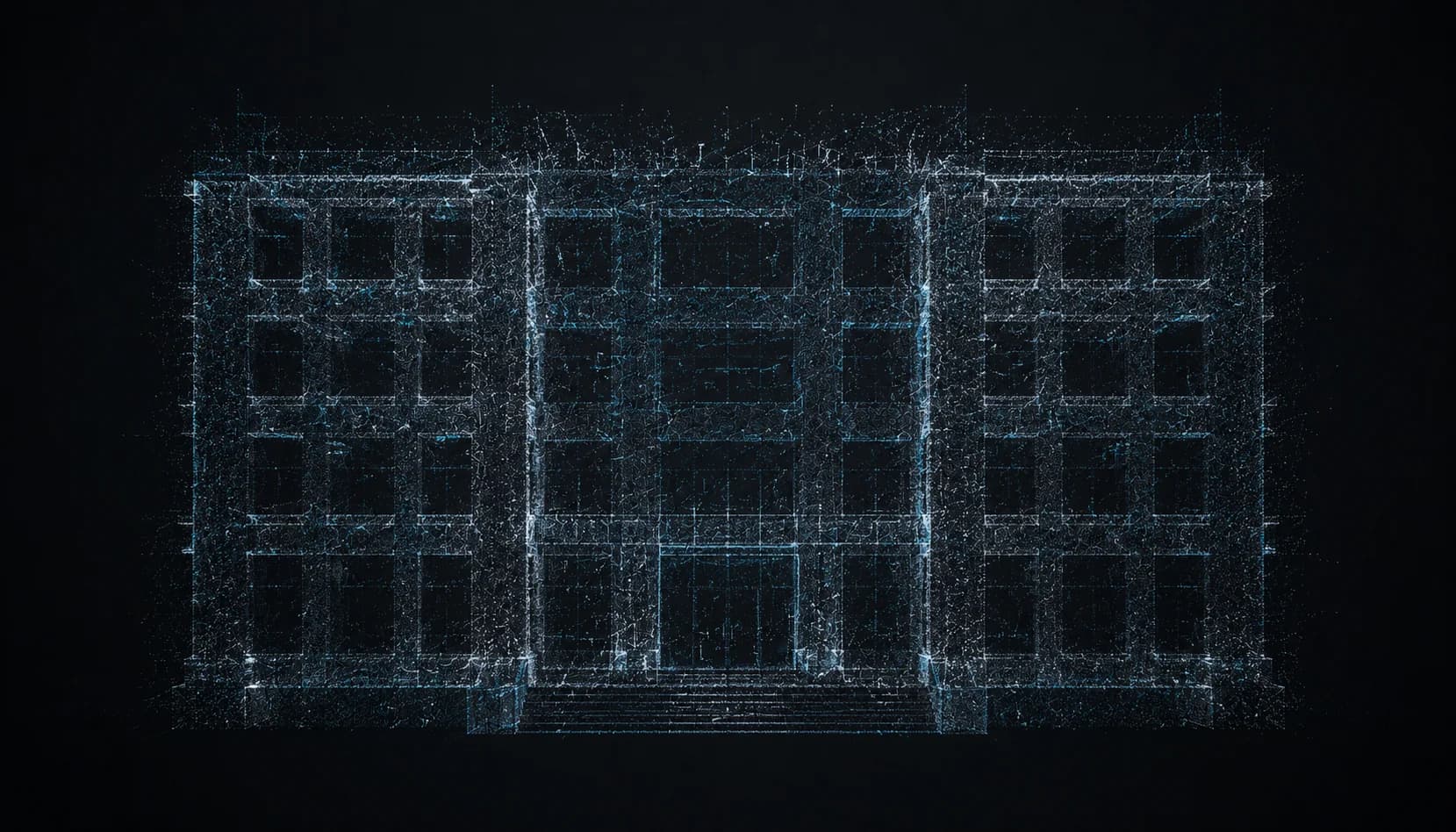
Spatial geometry becomes meaningful when observed across time. INPSN continuously compares the evolution of geometric structures against expected behavioural baselines for the environment. Slow drift, rapid directional change, stagnation, compression, and expansion each encode distinct behavioural states.
This temporal interpretation allows the system to recognise emerging crowd compression, the early signatures of interpersonal escalation, unexpected occupation of restricted zones, or the development of environmental anomalies. These states are encoded not as personal identifiers but as evolving geometric behaviours that can be evaluated for safety and operational significance.
Projection into the Digital Twin Coordinate System
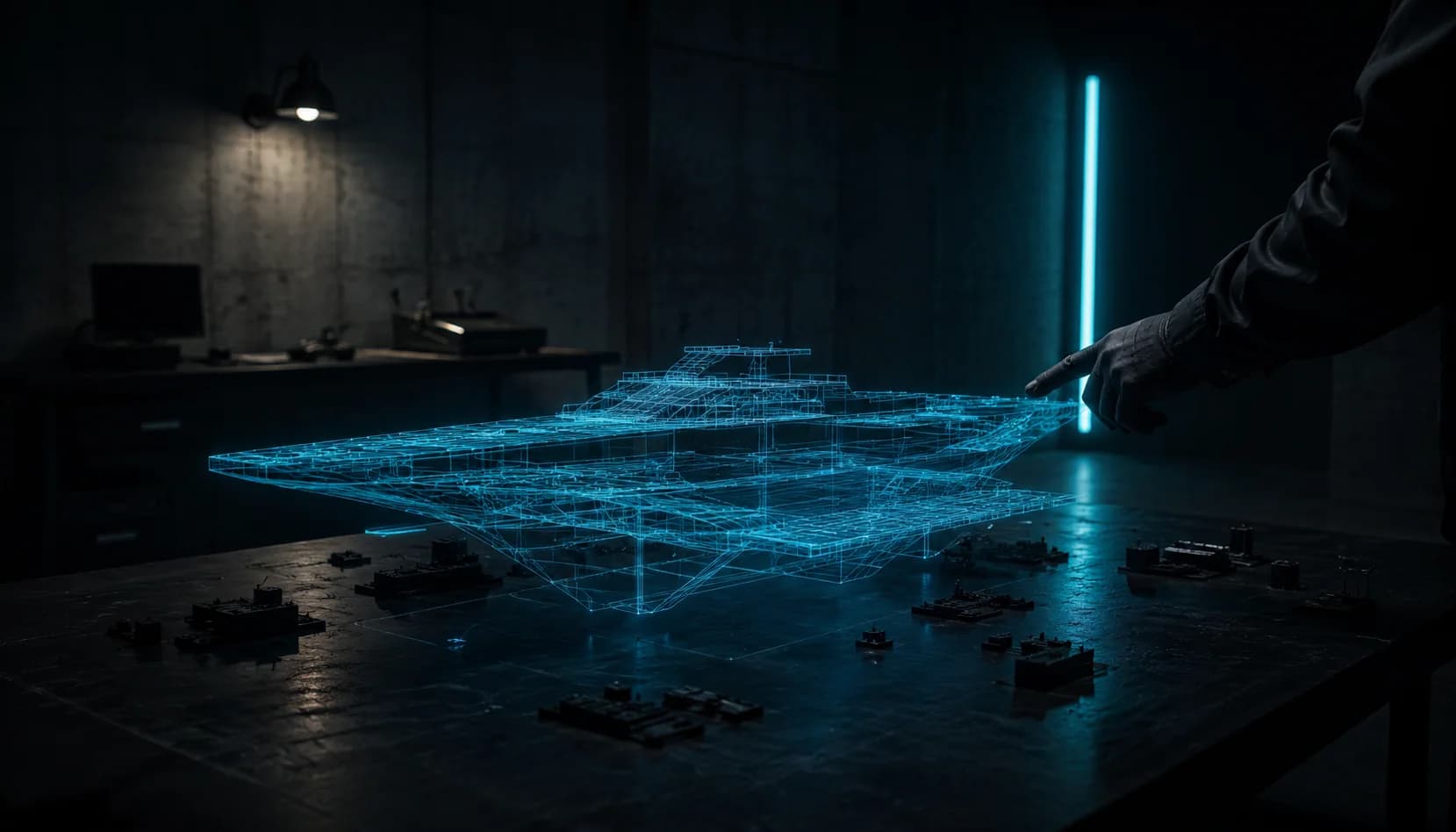
All reconstructed geometry is then projected onto the legally measured digital twin of the premises. This ensures perfect spatial consistency between live activity and the client’s architectural environment. Every posture shift, movement flow, or object displacement appears exactly within the correct corridor, room, stairwell, or open area of the model.
This alignment enables command teams to understand activity contextually, not as abstract forms, but as behaviour occurring within a precise legal and operational environment suitable for review, audit, and forensic reconstruction.
Privacy-Preserving Reconstruction Doctrine
At every stage of reconstruction, INPSN enforces strict privacy doctrine. Geometry is designed not to be derived from optical imagery, is governed to be tied to an identity, and is designed so that it does not reconstruct as a original recognisable shape. Posture and movement are expressed through abstract geometric volumes encoded only for command comprehension and safety relevance.
Even when geometry becomes highly detailed in motion accuracy, it is governed so that it does cross into representation of appearance. This ensures full compliance with global privacy standards and preserves the ethical foundation of frequency-based spatial intelligence.
Cognitive Data Routing into BIE & MYTHIC
Once reconstructed geometry is aligned and contextualized, it enters the cognitive evaluation layer. The Behavioural Intelligence Engine interprets geometric behaviour for posture state, anomaly signatures, and early risk indicators. MYTHIC then synthesizes these evaluations into coordinated guidance for command units, guard orchestration, and proactive interventions.
Through this routing, raw perception becomes structured insight, and structured insight becomes governed operational intelligence. Every transition remains auditable, owner-controlled, and legally compliant, forming the cognitive bridge between perception physics and command governance.

Confidentiality & NDA Boundary (Restricted Technical Methods)
The reconstruction processes described in Section 3.5 constitute restricted technical methodologies of NeuraLoop’s proprietary spatial-intelligence engine. The Geometry Reconstruction Pipeline, its distortion-analysis heuristics, sampling sequences, shape-generation logic, MYTHIC interpretation bridges, and colour-agnostic rendering framework operate under confidential intellectual property models and are disclosed exclusively for evaluation under strict non-disclosure conditions.
No part of this architecture, including sampling physics, reconstruction logic, inference thresholds, pattern-evolution models, or mesh-to-geometry synthesis mechanisms, may be replicated, reverse-engineered, reinterpreted, or adapted into derivative systems without explicit written authorization from NeuraLoop Surveillance Intelligence Private Limited.
The information provided herein is intended solely for qualified readers operating under approved confidentiality agreements and does not constitute technical licensing, implementation rights, or architectural transfer. All reconstruction logic and cognitive-routing methodologies remain proprietary, legally protected, and subject to sovereign governance frameworks.
INPSN’s Geometry Reconstruction Pipeline is a protected institutional asset; its disclosure is limited strictly to strategic evaluation, compliance review, or contractual due diligence.
This document forms part of the INPSN Technical Doctrine Series and is subject to NeuraLoop’s governance, confidentiality, and disclosure protocols. Deeper engineering details, system logic, and proprietary algorithms require an NDA-bound technical brief.
This page describes system doctrine, operational intent, and safety governance. Technical parameters, implementation details, and operational thresholds are restricted and disclosed only under contractual NDA.