VERTICAL AXIS STABILIZATION
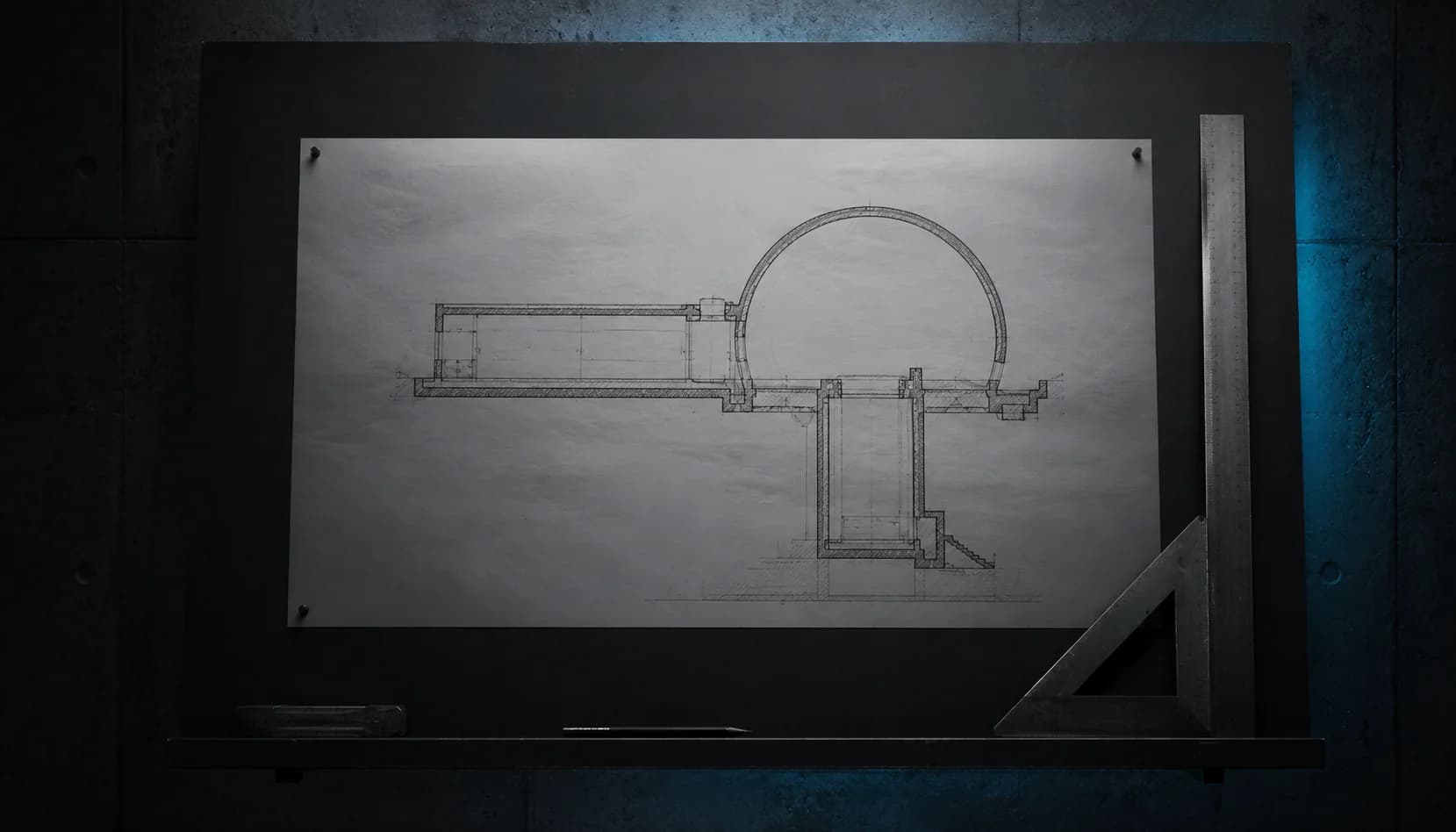
The vertical dimension of a multi-level estate introduces complexities that traditional sensing systems struggle to interpret: movement across stacked planes, stairway and lift traversal, vertical crowd behaviour, and the possibility of signal confusion between adjacent floors. INPSN resolves these challenges through Vertical Axis Stabilization, a doctrine in which each floor is treated as an independent spatial perception domain governed by its own calibrated UWB mesh, while still participating in a continuous, unified understanding of movement across the estate.
Each floor’s UWB grid is engineered strictly within its architectural boundaries, independent of the size or geometry of the level. Whether a floor spans a compact mezzanine or a large atrium expanse, the frequency domain remains self-contained, structured, and immune to bleed-through. This independence ensures that posture flow, object disturbances, and behavioural signatures remain anchored to the correct architectural plane, eliminating the risk of vertical misinterpretation. When personnel or objects transition through stairways, lift shafts, or vertical corridors, INPSN interprets these movements as deliberately governed transitions rather than ambiguous anomalies. This allows the system to preserve continuity without collapsing distinct layers of perception into one another.
Vertical Axis Stabilization therefore forms the cognitive bridge between structural separation and operational continuity, allowing INPSN to understand how activity moves across height without compromising accuracy, architectural truth, or privacy compliance.
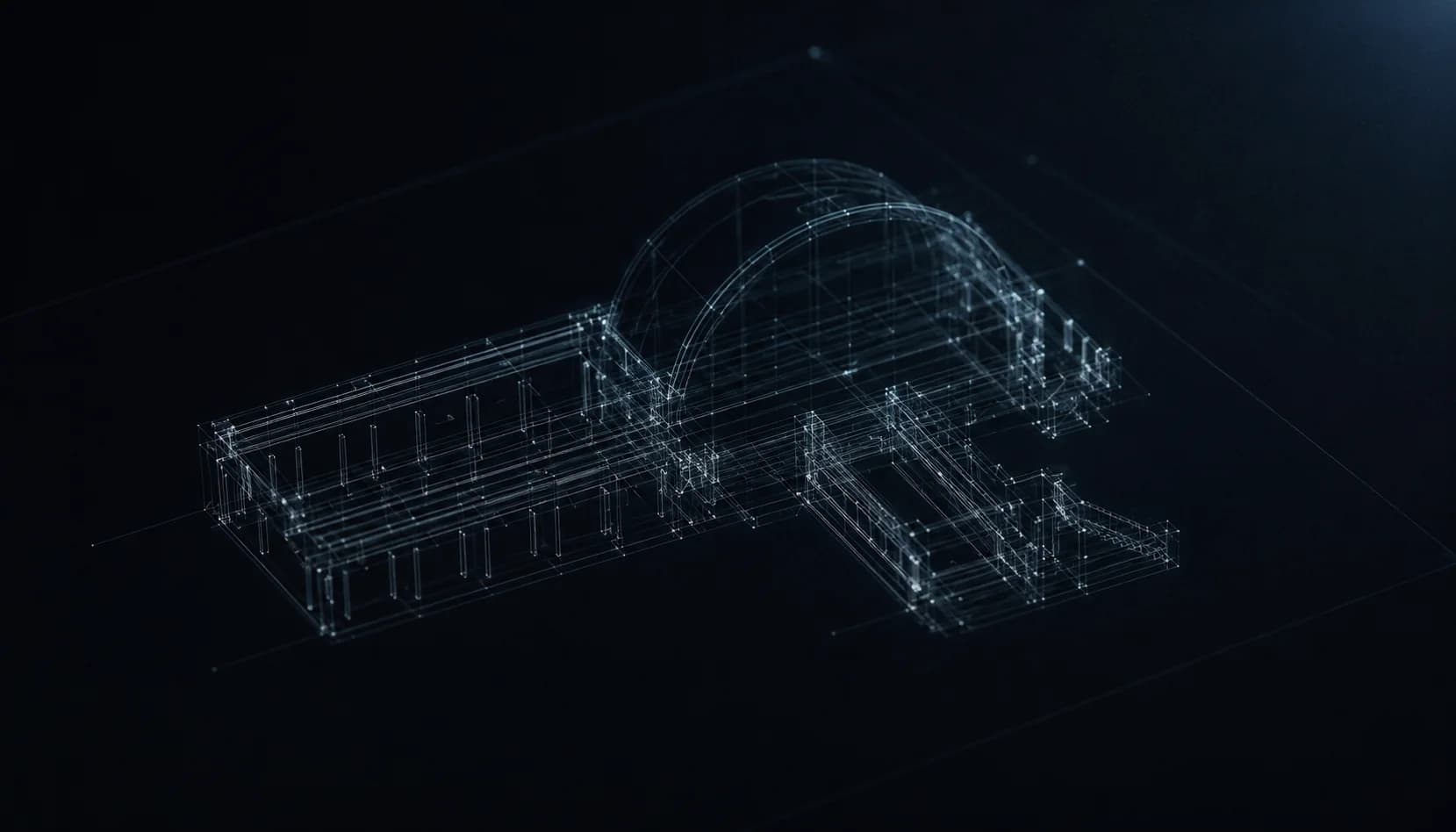
Floor-Isolated Spatial Domains as Independent Perception Environments
Each floor is treated as a self-governed spatial domain, equipped with its own calibrated UWB perception grid. These grids are designed solely for the volumetric dimensions of their respective floors, ensuring that micro-burst propagation remains confined to the architectural plane for which it is sanctioned.
This isolation prevents frequency overspill and maintains clarity in interpreting posture transitions and movement patterns. A motion detected on one floor cannot be misattributed to another, regardless of floor size, density, or footfall.
This establishes vertical certainty, the assurance that every reconstructed form corresponds to the correct structural domain.
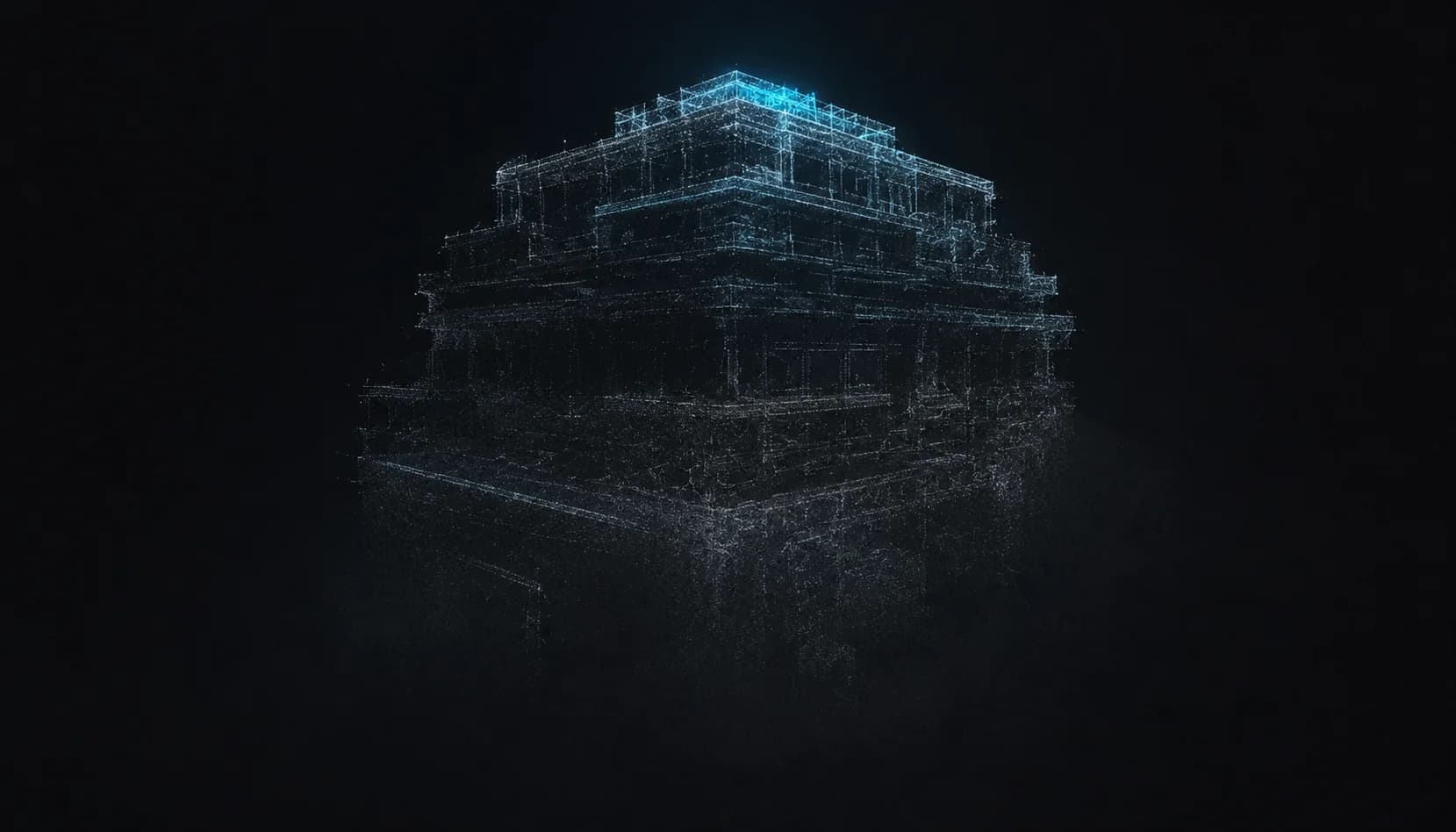
Architectural Anchoring Through Vertical Spatial Boundaries
Structural elements such as floor slabs, beams, stair enclosures, lift wells, and service shafts act as natural containment boundaries for UWB micro-burst propagation. INPSN’s perception mesh respects these boundaries, interpreting them as the defining edges of each spatial domain.
The result is architectural anchoring, the stabilization of each floor as a discrete measurement environment.
Vertical separation is therefore not merely a physical condition; it becomes a cognitive principle for maintaining spatial truth across levels.
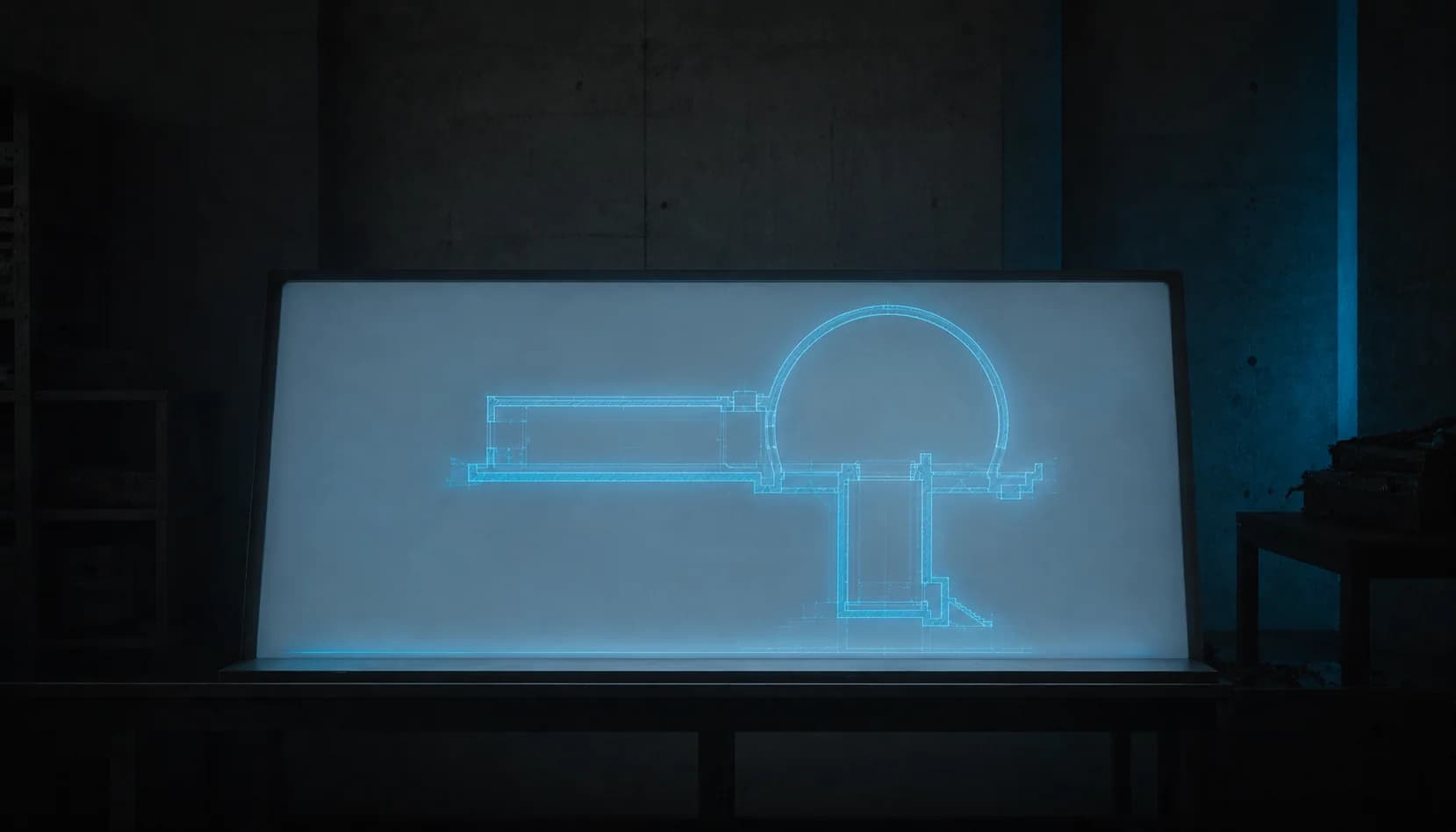
Continuous Interpretation of Stairway and Lift Movement
Vertical pathways, staircases, ramps, and elevator zones, operate as controlled transition corridors. INPSN does not treat them as ambiguous intermediate spaces. Instead, they are recognized as structured conduits through which motion traverses between domains.
As a person or object enters these corridors, the system interprets their movement as vertical progression, not lateral deviation.
This prevents misclassification and preserves behavioural continuity, enabling INPSN to maintain real-time certainty as individuals rise or descend through the estate.

Seamless Handover Between Independent Floor Grids
When a moving entity exits one floor’s grid and approaches the next, INPSN performs a seamless cognitive handover. The outgoing grid concludes its interpretation as the incoming grid begins its own.
This transition is not based on identity recognition but on geometric continuity, a frequency-derived understanding of how posture, velocity, and spatial bearing evolve through the vertical conduits.
The result is smooth cross-floor comprehension without merging or confusing signals across layers.
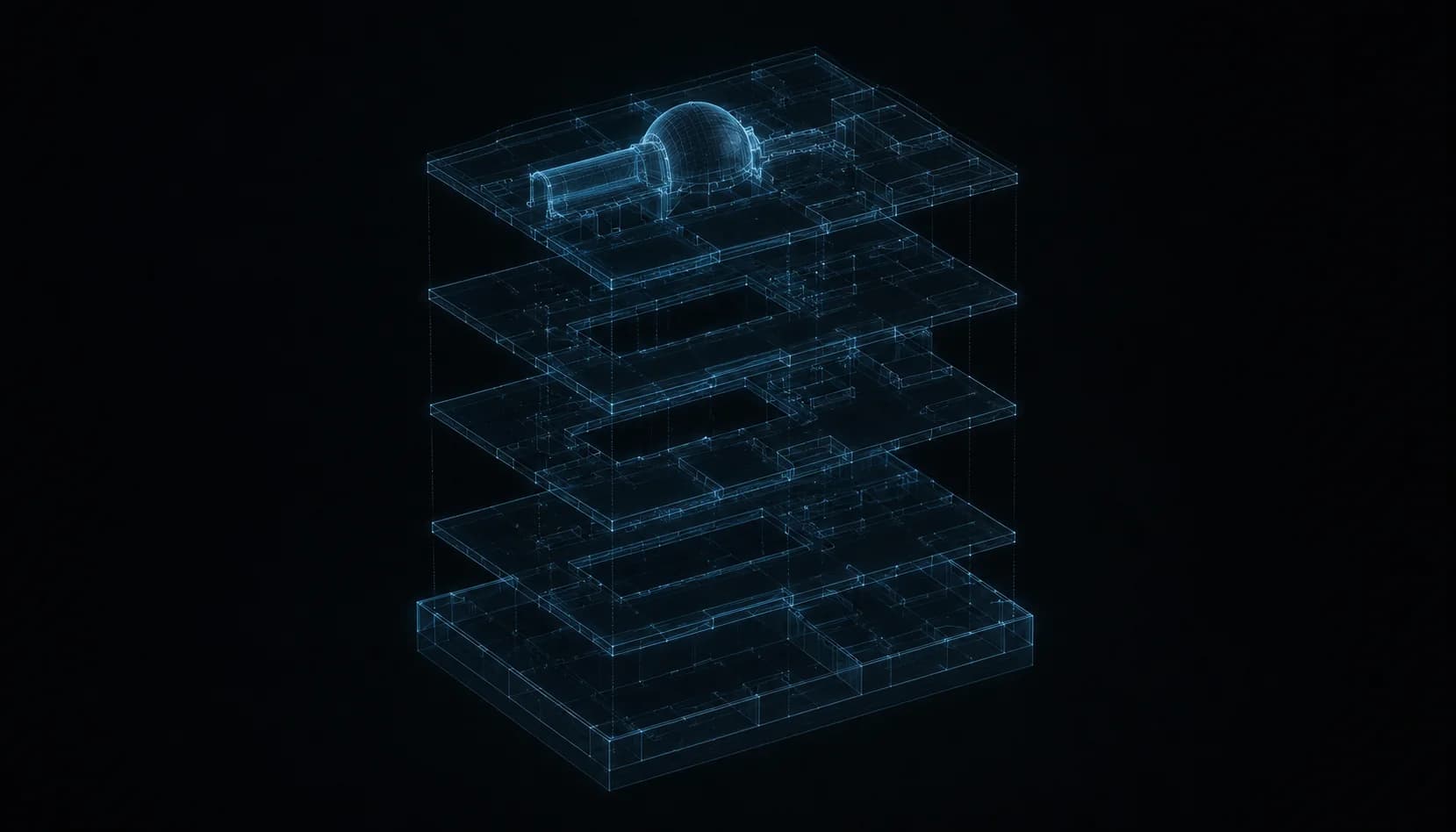
Multi-Floor Behavioural Coherence Inside the Digital Twin
Within the digital twin, floor-by-floor reconstruction remains distinct yet unified. Operators may isolate a single level, observe composite stacks, or enable “no-walls” sectional views to understand how behaviour propagates across the estate.
Crowd pressures, anomalous flows, or stagnation pockets emerging across multiple floors can be observed in continuity, enabling leadership to interpret vertical movement dynamics without losing fidelity to structural reality.
The digital twin therefore becomes a coherent vertical theatre, expressing behaviour across height as clearly as across horizontal space.
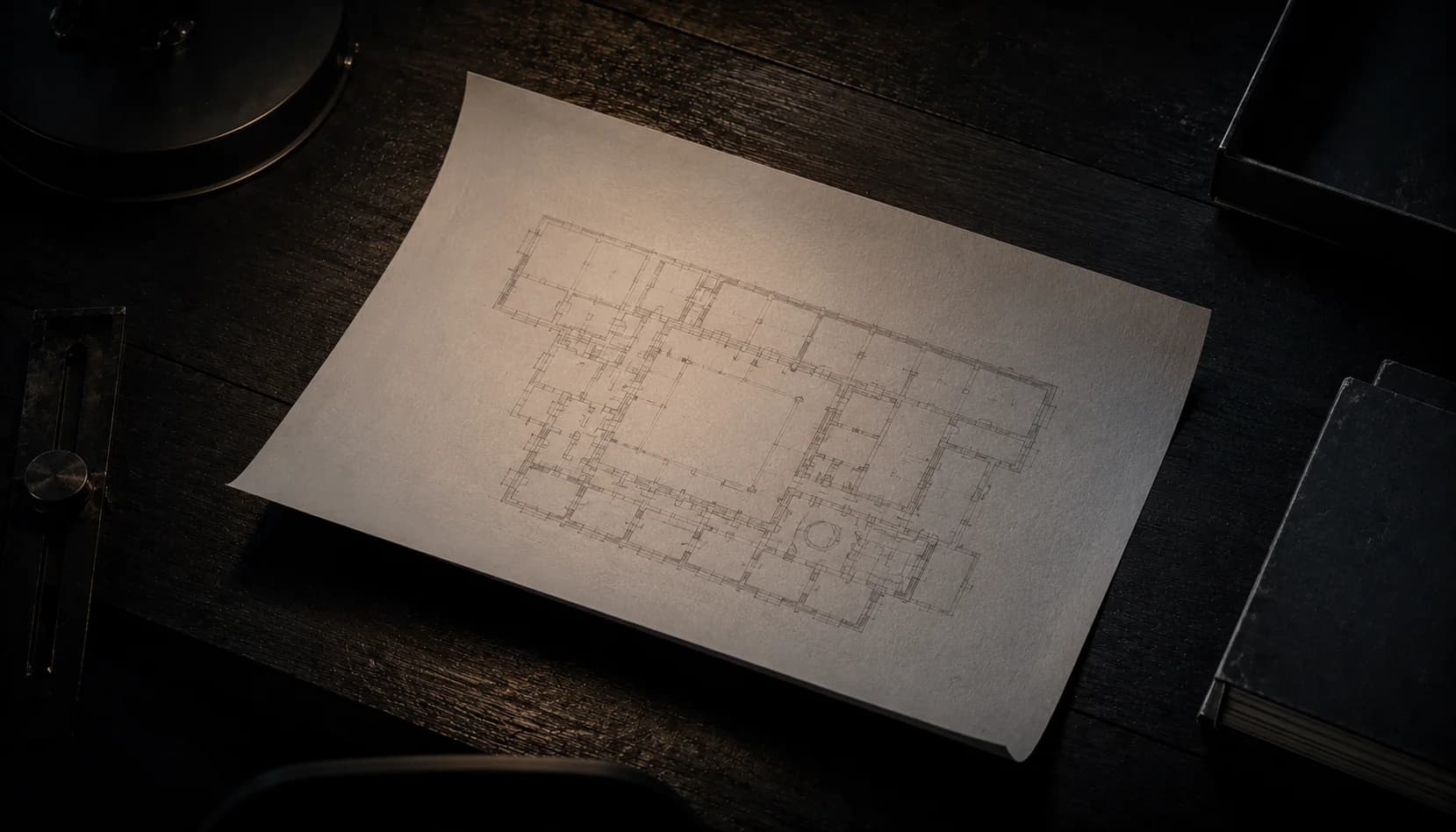
Prevention of Vertical Signal Bleed and Misattribution
Because each floor’s mesh is calibrated exactly to its architectural volume, INPSN prevents vertical signal interference without requiring excessive power, complex filtering, or intrusive hardware tactics.
This ensures that frequency distortions remain tied to the correct domain, maintaining the integrity of behavioural signatures and preventing false positives that might arise from open atriums or stacked operational zones.
Vertical signal integrity is therefore preserved through scientific boundary definition rather than restrictive power constraints.
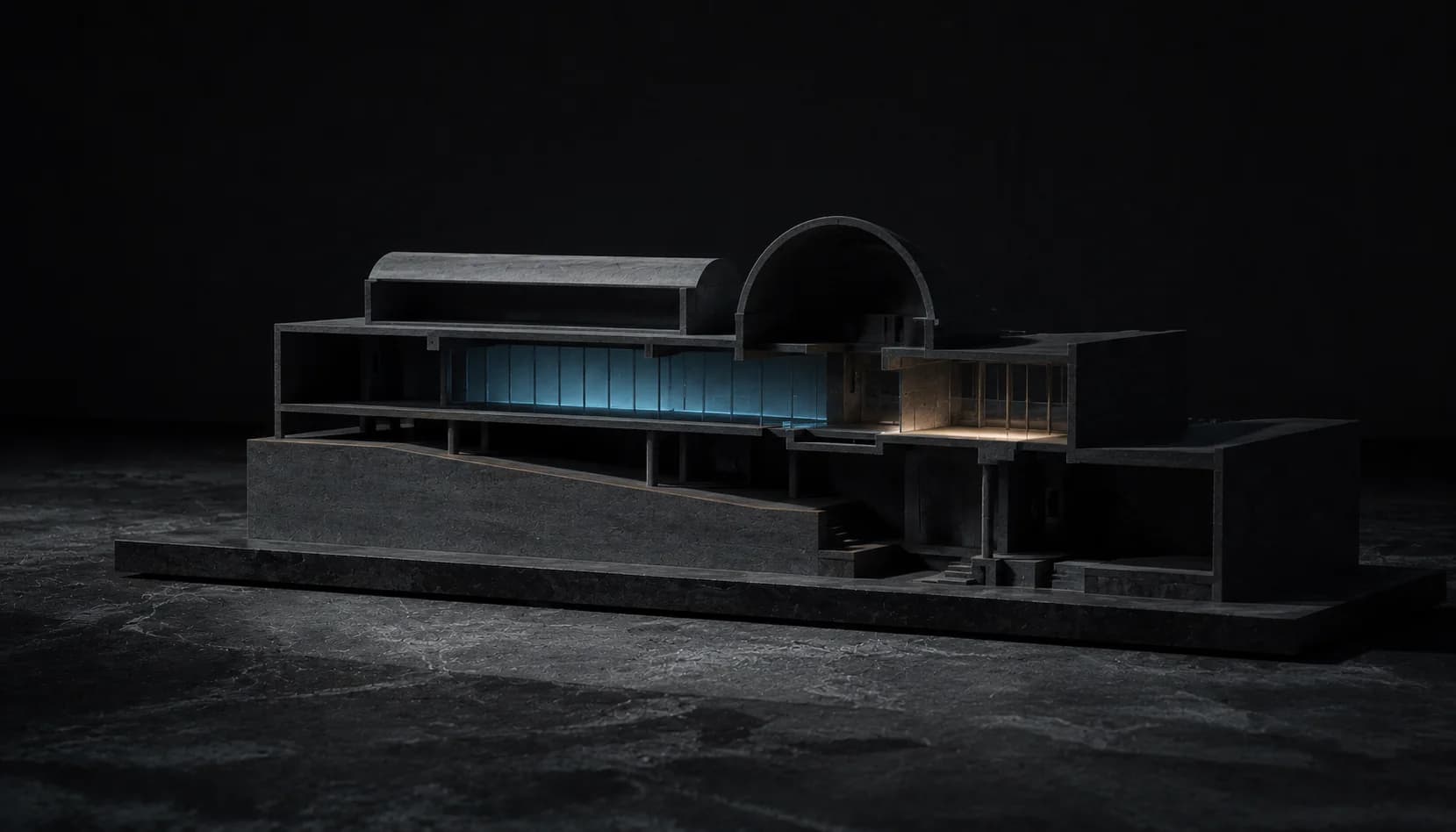
Governance, Authorization, and Vertical Operational Oversight
Vertical Axis Stabilization operates under full client authority.
Operational teams may observe multi-floor activity, define restricted zones, or monitor vertical progression patterns, but structural interpretations and domain boundaries are governed exclusively by client-approved architectural configurations.
No automated system, including MYTHIC, may modify floor definitions, alter structural separation, or merge domains without explicit authorization.
This ensures legal, operational, and spatial sovereignty across the entire vertical estate.
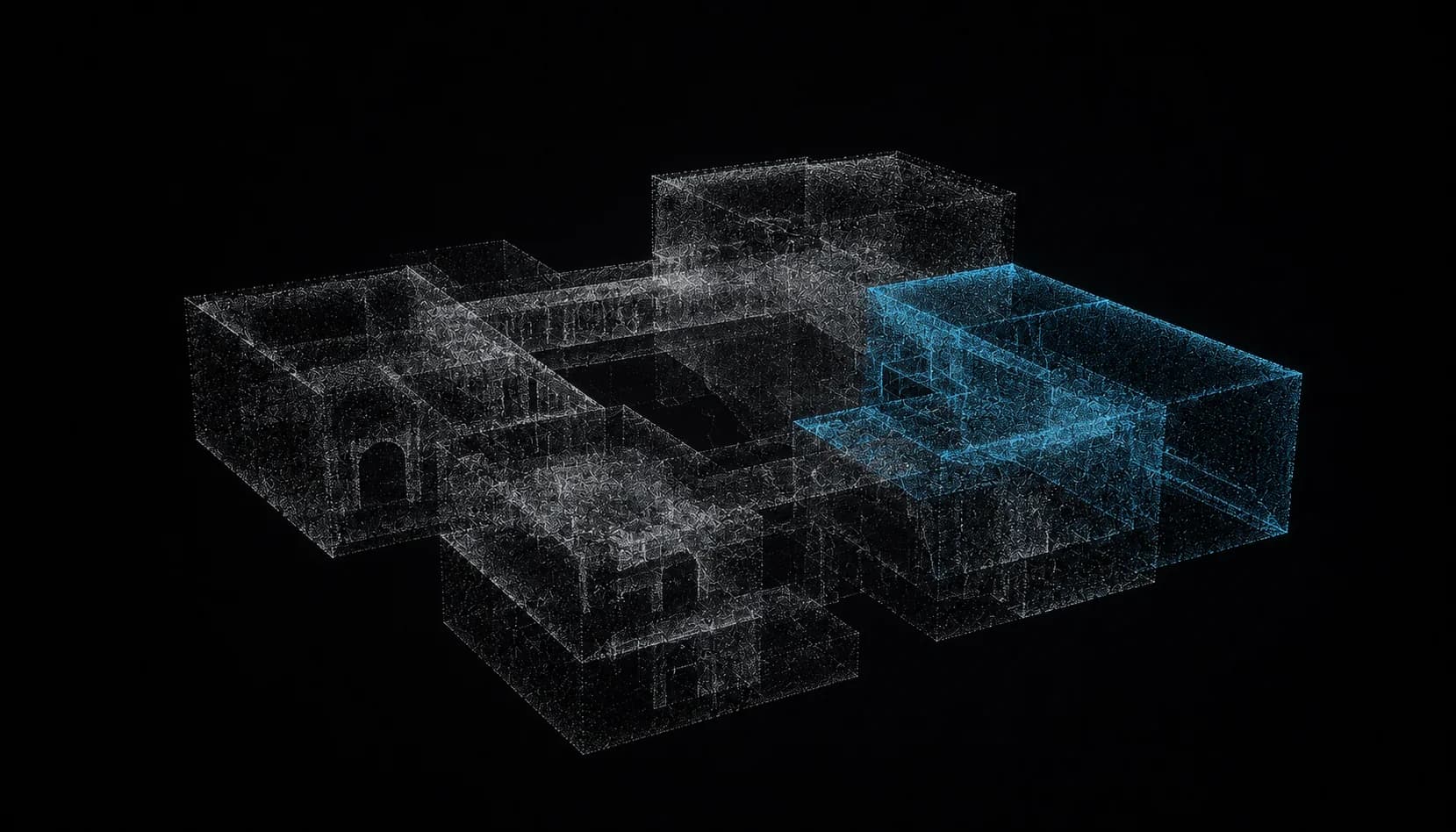
NDA-Restricted Engineering Detail
Technical mechanisms underlying vertical handover logic, cross-mesh arbitration rules, inter-floor propagation gating, and continuity-estimation processes are available only under NDA for institutional due-diligence evaluation.
These mechanisms preserve the proprietary integrity of INPSN’s multi-layered spatial cognition model while enabling enterprise stakeholders to assess compliance and operational fit.
This page describes system doctrine, operational intent, and safety governance. Technical parameters, implementation details, and operational thresholds are restricted and disclosed only under contractual NDA.